U.S. Rep. Byron Donalds voted "against three pay raises for military service members, including the largest pay raise for the military in 22 years."


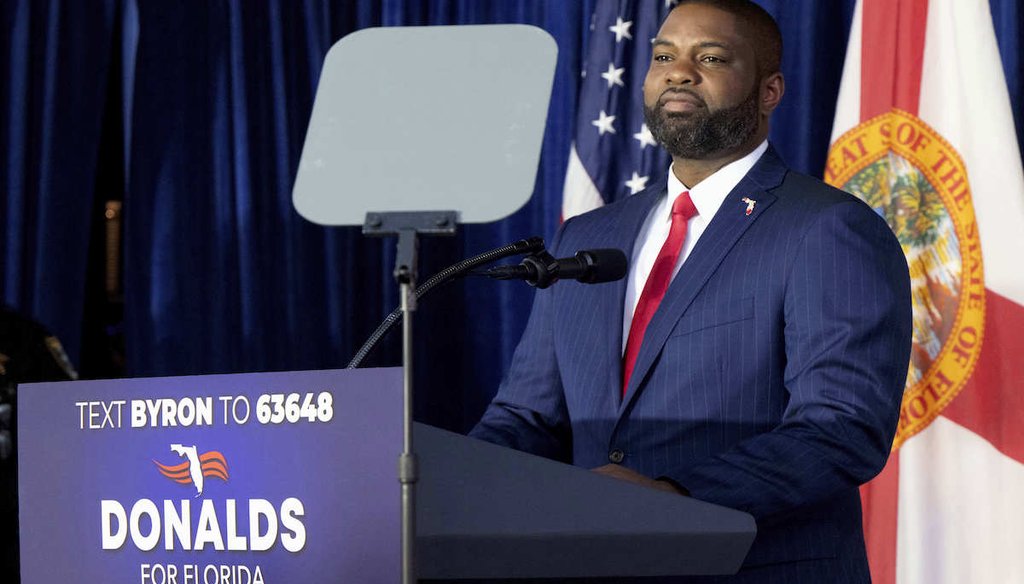
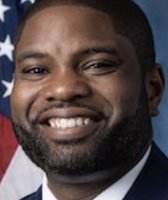
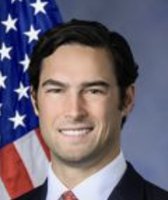
Gubernatorial candidate U.S. Rep. Byron Donalds speaks during his kickoff campaign on March 28, 2025, in Bonita Springs, Fla. (AP)

The National Defense Authorization Act is a sweeping annual package that sets funding and policy for the U.S. Defense Department. The legislation is typically thousands of pages and involves billions of dollars that often fund other, non-military provisions.
U.S. Rep. Byron Donalds, R-Fla., voted against the legislation in 2022, 2023 and 2025, because he said he disagreed with different provisions in the bills, not military pay raises. He supported the legislative package in 2021 and in 2024. All bills included military pay increases.
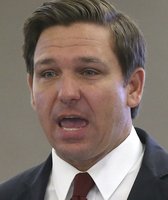
Florida Republican Lt. Gov. Jay Collins, an Army combat veteran, attacked his leading opponent in the state’s gubernatorial race over not supporting military pay raises.
The Collins campaign distributed a 13-page document titled "Congressman Byron Donalds’ Liabilities." Donalds holds a double-digit lead against his primary opponents.
"Byron Donalds voted with (U.S. Rep. Alexandria Ocasio-Cortez, D-.N.Y.) and the radical Socialist Squad against three pay raises for military service members, including the largest pay raise for the military in 22 years," the document said, referencing Donalds’ votes against the National Defense Authorization Act in 2022, 2023 and 2025.
The Collins campaign lobbed this and many other attacks about Donalds’ criminal history and past associates after an April 20 event in St. Petersburg.
Collins’ campaign referred PolitiFact to the document Collins distributed. But framing Donalds’ votes as being solely against military pay is misleading.
The National Defense Authorization Act is a sweeping annual package that authorizes billions in funding and policy for the U.S. Defense Department, with several non-military provisions tacked on. Donalds voted against the legislation in the three years Collins references, but he also supported it in two other years. Each bill included military pay raises.
Donalds’ campaign told PolitiFact his mixed voting record reflects his disagreement with other provisions in the bills, not because he opposed raising military pay.
When a reporter asked Donalds about Collins’ attack, he referenced the bills he voted against during President Joe Biden’s administration, saying they included policies that were "actually hurting our military men and women."
"In 2022, yeah I voted against the NDAA," Donalds said April 20, "because the Biden Administration had a radical policy in there that Nancy Pelosi and Chuck Schumer were pushing through Congress. Of course I voted against it, and so did all conservatives in Congress."
The bill had provisions that some Republicans in Congress didn’t like, but many conservatives in both chambers ended up voting for it.
The National Defense Authorization Act, which Congress has passed every year since 1961, authorizes about $800 billion in defense spending in recent years. It serves as the primary vehicle for setting military salaries, housing allowances and health benefits. It also approves funding for a wide swath of military operations, including research, training, construction and equipment procurement.
The legislation frequently includes non-military provisions with which Democrats and Republicans disagree, prompting members of both parties to routinely vote against it.
"It would be disingenuous to pull out one topic — like the pay raise — and say a vote against the annual defense authorization bill is a vote against the raise," said Elaine McCusker, a senior fellow at the conservative-leaning American Enterprise Institute who focuses on defense strategy and budget, noting that the legislation is "thousands of pages" long.
Donalds voted for the National Defense Authorization Act twice — in 2021 and 2024 — and against it three times in 2022, 2023 and 2025, the last one under President Donald Trump. Each bill included raises for servicemembers and became law.
Donalds and 34 other House Republicans voted against the NDAA in 2022. His campaign characterized it as a "Biden agenda bill" with "no amendments and Ukraine funding" that "included (diversity, equity and inclusion) programs, climate initiatives and no spending offsets."
In 2023, the NDAA provided a 5.2% military pay increase, the largest for military members in over 20 years. At the time, Donalds said he voted against the legislation because it included the reauthorization of the Foreign Intelligence Surveillance Act, or FISA, a law passed after 9/11 that has been used to surveil American citizens.
"There should be no clean reauthorizations of FISA in the National Defense Authorization Act," Donalds told the late Charlie Kirk on Dec. 11, 2023, a few days before the vote. "That should be removed immediately. I completely disagree with House leadership on that. That should not occur." Donalds’ campaign also pointed to anti-DEI provisions the Senate removed from the bill, and climate change-related requirements for the Pentagon.
The House passed the National Defense Authorization Act for fiscal year 2026 on Dec. 10, 2025, with a 312-112 vote. The bill authorized $900 billion in Pentagon programs, which included a 3.8% pay raise for service members. Donalds voted against it. (Other Florida Republicans also opposed it, Reps. Greg Steube and Anna Paulina Luna.)
The bill required the Pentagon to release additional information on U.S. boat strikes in the Caribbean and expanded support for Ukraine. Donalds’ and other Republicans’ resistance to the bill involved the Ukraine aid and missing provisions banning the government from issuing central bank digital currency.
Donalds hasn’t said why he supported the NDAA bills in 2021 and 2024. However, some House Republicans praised the 2021 legislation as a "clean" defense bill from which Democratic provisions on "red flag" gun laws and initiatives to eliminate extremism in the military had been stripped out. The 2024 bill banned certain types of medical or surgical gender reassignment procedures for children of service members on military health plans.
Collins said Donalds voted "against three pay raises for military service members, including the largest pay raise for the military in 22 years."
This is cherry-picked.
Donalds voted against the National Defense Authorization Act three times, and for it twice. But the legislation is multi-faceted. While it includes increasing military pay, it also authorizes billions in funding for military operations, and typically tacks on several unrelated provisions.
Donalds said his votes reflect his disagreement with other provisions in the bills, not military pay.
The statement contains an element of truth about Donalds’ vote record but gives the wrong impression that he opposed military pay raises.
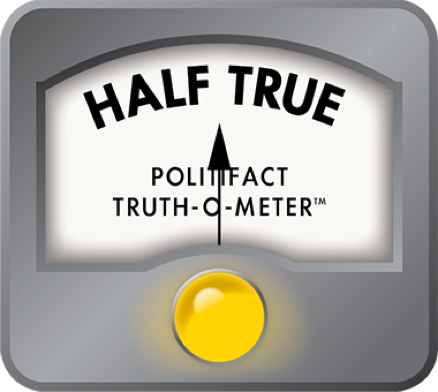
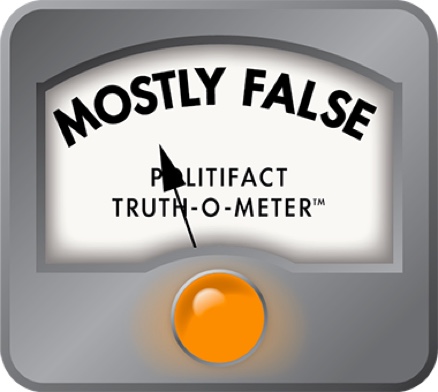
We rate it Mostly False.
X.com, Jay Collins press conference clip, April 20, 2026
Lt. Gov. Jay Collins campaign, Byron Donalds’ opposition research document, Accessed April 21, 2026
X.com, Rep. Byron Donalds clip, April 20, 2026
The Tampa Bay Times, Jay Collins says Byron Donalds could lose governor’s race to Democrats, April 21, 2026
House Armed Services Committee, History of the NDAA, Accessed April 22, 2026
American Legion, Senate approves defense bill with largest pay raise for troops in 22 years, Dec. 14, 2023
The Hill, Conservatives grumble over defense bill compromises, Dec. 10, 2025
Newsweek, Full List of Republicans Voting Against Military Spending Bill, Dec. 10, 2025
Politico, Compromise Pentagon bill narrowly clears major House procedural hurdle, Dec. 10, 2025
X.com, Rep. Greg Steube post, Dec. 10, 2025
U.S. House of Representatives Clerk, Roll Call 320 | Bill Number: S. 1071, Dec. 10, 2025
U.S. House of Representatives Clerk, Back to Previous Page Roll Call 516 | Bill Number: H. Res. 1512, Dec. 8, 2022
U.S. House of Representatives Clerk, Roll Call 723 | Bill Number: H. R. 2670, Dec. 14, 2023
Donalds.house.gov, ICYMI: Donalds Joins The Charlie Kirk Show, Dec. 11, 2023
YouTube, Rep. Donalds on Real America's Voice The Charlie Kirk Show, Dec. 11, 2023
The Washington Post, House passes defense policy bill, a rebuke of GOP’s far-right fringe, Dec. 14, 2023
Congress.gov, Final House vote on Defense Authorization Act for Fiscal Year 2025, Dec. 11, 2024
Congress.gov, Final House vote on Defense Authorization Act for Fiscal Year 2022, Dec. 7, 2021
Email interview, Jason Puwalski Collins campaign spokesperson, April 21, 2026
Email interview, Rep. Byron Donalds campaign office, April 22, 2026
Email interview, Elaine McCusker, senior fellow at the American Enterprise Institute, April 22, 2026












In a world of wild talk and fake news, help us stand up for the facts.