
“Under federal law, you cannot engage in partisan gerrymandering.”

Our only agenda is to publish the truth so you can be an informed participant in democracy.
We need your help.

No federal law says states cannot undertake partisan gerrymandering.
The U.S. Supreme Court ruled in 2019 that partisan gerrymandering claims are "political" questions that federal courts can’t answer.
Florida's Republican-controlled Legislature approved a new congressional map that could help the GOP flip four seats in the midterm elections.
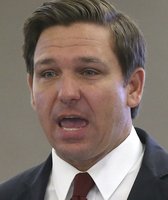
State Democrats say the map, put forward by Gov. Ron DeSantis, conflicts with Florida’s Fair Districts amendment prohibiting drawing districts with partisan intent. DeSantis has offered several reasons for the changes, including population growth.
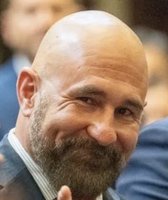
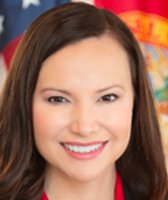
Florida House Democratic Leader Fentrice Driskell, D-Tampa, went further, saying after the April 29 vote that it was not only illegal on a state level, but also federal.
"Even if Fair Districts falls, you still have general principles of map drawing, and you still have, under federal law, you cannot engage in partisan gerrymandering," Driskell told reporters. "It would not be OK to draw that map based on partisan data."
Gerrymandering is drawing district boundaries to give one political party, incumbent or group an advantage.
No federal law says states cannot undertake partisan gerrymandering. The U.S. Supreme Court ruled in 2019 that partisan gerrymandering claims are "political" questions that federal courts can’t answer.
"The court ruled the matter ‘nonjustiable’ by federal courts," said Rick Hasen, a UCLA School of Law election law expert. "It recognized the argument that partisan gerrymandering could be unconstitutional but it wasn’t for the federal courts to say when it is happening."
The court’s majority opinion said excessive gerrymandering is "incompatible with democratic principles," but state legislatures and Congress have the responsibility to police it.
Driskell’s office told PolitiFact she misspoke and meant to reference racial gerrymandering prohibitions in federal law and the partisan gerrymandering prohibitions in state law.
In Rucho v. Common Cause, Chief Justice John Roberts, writing for a 5-4 majority, said that although extreme partisan gerrymandering may seem reasonably "unjust," the Constitution provides no manageable standard for federal judges to determine when a redistricting plan becomes too partisan.
"The fact that such (excessive) gerrymandering is ‘incompatible with democratic principles,’" Roberts wrote, "does not mean that the solution lies with the federal judiciary." Federal judges have "no license to reallocate political power between the two major political parties, with no plausible grant of authority in the Constitution."
The opinion acknowledged that courts have gotten involved in other redistricting-related claims, such as racial gerrymandering, but said partisan gerrymandering is particularly thorny because it’s well settled law that legislatures can consider politics when drawing maps.
The Constitution doesn’t explicitly mention "gerrymandering" or "partisan gerrymandering." But the practice is regulated through several constitutional provisions, including the elections clause and the 14th Amendment.
The Article 1, Section 4 elections clause grants state legislatures the power to oversee congressional elections. The Supreme Court pointed to this clause in its 2019 decision as the primary constitutional tool for addressing gerrymandering.
Critics of gerrymandering say it violates the 14th Amendment’s equal protection clause by diluting citizens’ voting power based on political affiliation. The clause says no state shall "deny to any person within its jurisdiction the equal protection of the laws," requiring them to treat people in similar situations equally and prohibits discriminatory laws.
The Supreme Court has used the clause to strike down racial gerrymandering and population imbalances, often called the "one person, one vote" principle. It ruled in Rucho that federal courts can’t use it to police partisan intent because there’s no clear mathematical standard for "fairness."
Potential challenges to Florida’s new map lie in state law, not federal.
In 2010, 63% of Florida voters approved the Fair Districts amendments to be added to the state Constitution. They prohibit redistricting plans "with the intent to favor or disfavor a political party or an incumbent" and plans with the intent or result of "denying or abridging the equal opportunity of racial or language minorities to participate in the political process."
"The Florida maps are far more likely to be challenged in state court, on state constitutional grounds, given Florida’s fair districting amendment," Hasen said. "That’s why DeSantis went out of his way to say that he was drawing the maps because populations have shifted — a clear subterfuge since he sent out maps showing the partisan implications."
DeSantis had said the Legislature would be "forced" to redistrict because of an expected Supreme Court decision over whether certain race-based districts under the Voting Rights Act are unconstitutional.
The high court ruled the districts unconstitutional, and DeSantis’ lawyers told state lawmakers they now believe both the partisan and racial sections of the Fair Districts amendments are unconstitutional. They said the race-based requirements in one section cannot be severed from the partisan-based requirements in the other.
Courts decide whether a provision can be severed from another by asking whether the drafters would have wanted the entire law to be eliminated, or if they would've wanted one part to stay intact, said Justin Levitt, a Loyola Marymount law school professor who served as a senior Biden policy adviser.
Daniel Smith, University of Florida political science professor, said that although the Supreme Court’s 2019 decision opened the door to partisan gerrymandering in some states, Florida is not one of them.
"Notwithstanding Governor DeSantis’ claims to the contrary," he said, "under Florida state law, the prohibition of gerrymandering to advantage or disadvantage a party or incumbent is still in effect."
Driskell said, "Under federal law, you cannot engage in partisan gerrymandering."
No federal law says states cannot undertake partisan gerrymandering. The Supreme Court ruled in 2019 that partisan gerrymandering claims are "political" questions that federal courts can’t answer, and left it to the states and Congress to pass laws to regulate redistricting.
In Florida, the Fair Districts amendment prohibits drawing congressional or legislative districts partisan intent. Driskell’s office said she misspoke.
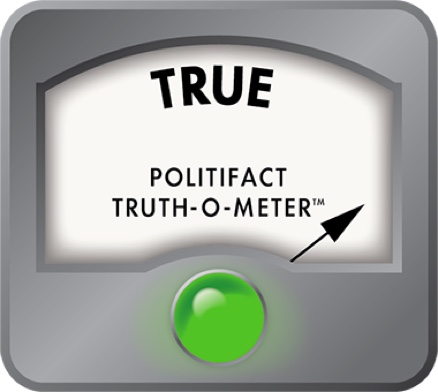
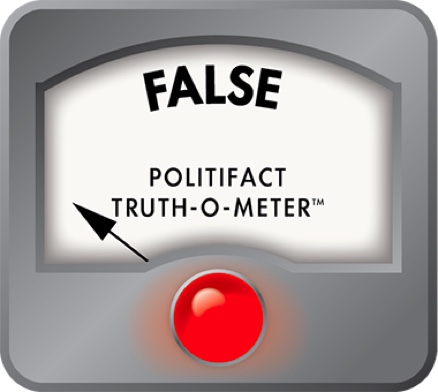
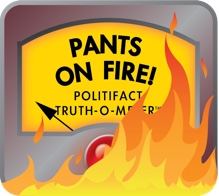
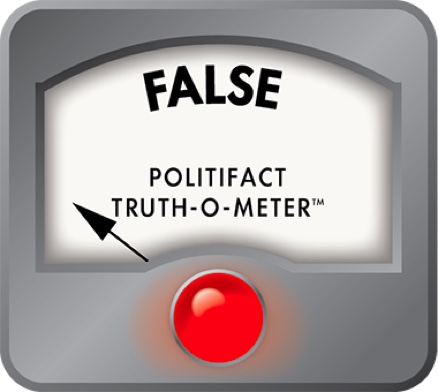
We rate the statement False.
RELATED: Is Florida’s mid-decade redistricting plan ‘illegal,’ as some Democrats say?
RELATED: Florida redistricting: DeSantis overstates voters’ shift from Democrats to Republicans
The Florida Channel, Press Availability with House Minority Leader Fentrice Driskell, April 29, 2026
Politico, Florida passes DeSantis’ redistricting map that could net the GOP 4 seats, April 29, 2026
ScotusBlog.com, Opinion analysis: No role for courts in partisan gerrymandering (Updated), June 28, 2019
PBS, Is political gerrymandering illegal? 6 things to know as Texas dispute carries on, Aug. 4, 2025
PolitiFact, Is Florida’s mid-decade redistricting plan ‘illegal,’ as some Democrats say?, April 15, 2026
Florida Phoenix, DeSantis says Florida ‘will be forced’ to redistrict because of pending U.S. Supreme Court decision, Dec. 3, 2025
Constitution Annotated, Article I Legislative Branch, Accessed April 29, 2026
Constitution Annotated,Fourteenth Amendment Equal Protection and Other Rights, Accessed April 29, 2026
Florida Senate, CONSTITUTION OF THE STATE OF FLORIDA, Accessed April 29, 2026
Phone interview, Justin Levitt Loyola Marymount law school professor, April 28, 2026
Email interview, Rick Hasen election law expert at UCLA School of Law, April 28, 2026
Email interview, Daniel Smith political science professor at the University of Florida, April 28, 2026
Email interview, Lauren Guagliardo deputy communications director for Florida House Democratic office, April 28, 2026










In a world of wild talk and fake news, help us stand up for the facts.