
After U.S. vessel strikes in the Caribbean Sea and Pacific Ocean, “drugs entering our country by sea are down 97%.”

Our only agenda is to publish the truth so you can be an informed participant in democracy.
We need your help.

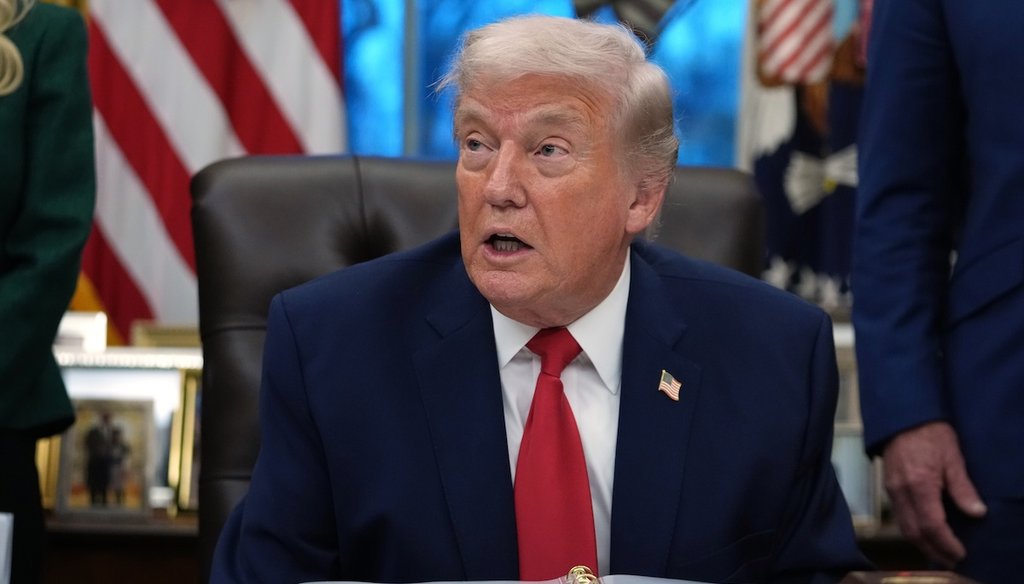
President Donald Trump speaks at an event on addiction recovery in the Oval Office of the White House, Jan. 29, 2026, in Washington. (AP)

From July 2025 to November 2025, Customs and Border Protection’s air and marine drug seizures dropped by 98%.
The Coast Guard, which is in charge of most maritime drug interdictions, saw a 200% seizure increase in fiscal year 2025 compared with other annual averages.
Drug seizures tell us only how many drugs are stopped from entering the U.S. The figures don’t show how many drugs are being sent to the U.S. or how many are making it in.
President Donald Trump has cited dramatic results from U.S. strikes on vessels in the Caribbean Sea and Pacific Ocean, saying they’ve nearly stopped the flow of drugs trafficked to the U.S. by water.
Since September 2025, the U.S. has struck at least 40 alleged drug vessels, killing 149 people.
"With our action in the Gulf of America, that sounds so nice when I hear the Gulf of America, drugs entering our country by sea are down 97%," Trump said at a Jan. 29 White House event. "So when you see the boats being hit, those boats kill on average 25,000 people a boat." We’ve rated the statement about 25,000 deaths Pants on Fire.
Even though Trump mentioned the Gulf of America, his comments appeared to reference the Caribbean and Pacific strikes.
When asked for evidence about the 97% claim, the White House pointed us to Customs and Border Protection statistics from July 2025 to November 2025. Those numbers show a 98% drop in the pounds of drugs seized by CBP air and marine operations.
But drug seizures tell us only how many drugs are stopped from entering the U.S. There isn’t data to show how many drugs are being sent to the U.S. or how many are making it in. Drug experts also say changes in drug seizure data aren’t sufficient to make definitive statements about policy outcomes.
"No one knows how much doesn't get caught, so no one can cite a precise percentage change," Jonathan Caulkins, a Carnegie Mellon University drug policy researcher, said. "Trump is making a claim about something that is unknowable."
The White House didn’t explain why it chose those months. There has been a drop in CBP drug seizures since September 2025 when the vessel strikes began, but the percentage drop fluctuates depending on the months compared.
Additionally, the Coast Guard — not CBP — oversees most drug seizures on water, especially in international waters, an agency spokesperson told PolitiFact. Its data shows a spike in annual cocaine seizures — 200% in fiscal year 2025 compared with its yearly average. (The Coast Guard generally focuses on cocaine seizures, while CBP’s 98% decline is mainly related to marijuana.)
While the White House cites a drop in CBP drug seizures as a success, the Coast Guard cites an increase in seizures as a sign of strong enforcement.
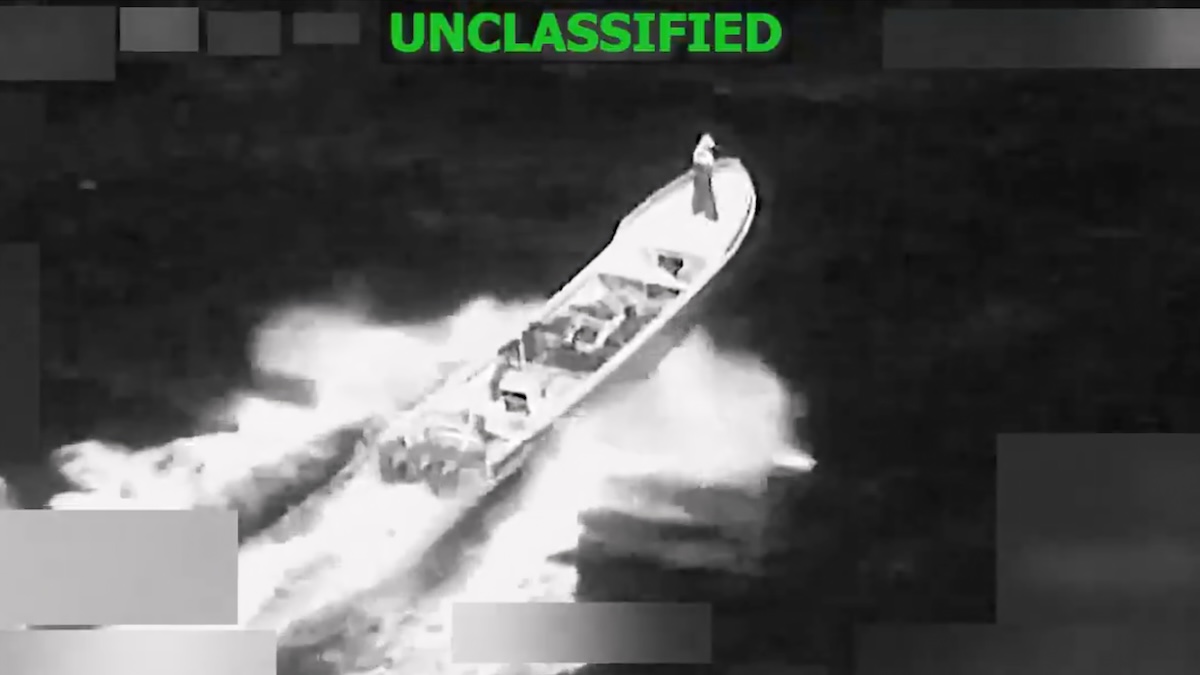
This image from video provided by U.S. South Command, shows a vessel accused of trafficking drugs in the eastern Pacific Ocean shortly before it was destroyed by the U.S. military, killing two and injuring one, Jan. 23, 2026. (U.S. Southern Command via AP)
The White House’s calculation starts in July 2025, which was an outlier with an uncharacteristically high number of marijuana seizures. In July, CBP seized 224,000 pounds of drugs, including 203,000 pounds of marijuana. CBP seizes about 20,000 pounds of all types of drugs in a month.
From August 2025, the last month before the vessel strikes began, to January, the latest available data, CBP drug seizures dropped 79%.
For the Coast Guard, drug seizures are up.
In the 2025 fiscal year which ended in September, the Coast Guard seized 510,000 pounds of cocaine, a 200% increase from a typical fiscal year when the Coast Guard seizes about 167,000 pounds of cocaine.
In August 2025, the Coast Guard launched an operation to target cartels and criminal organizations. From August 2025 to February 2026, the Coast Guard seized 200,000 pounds of cocaine more than it seizes in a typical year, according to agency press releases.
The Coast Guard has hailed the increase in seizures as a success in "preventing the flow of dangerous drugs into American communities."
Regardless of the data point, it’s unknown how many drugs enter the U.S. each year. Drug seizures show only how many pounds of a drug were stopped from getting into the U.S.
"It's a black market. And so by definition, we do not have good market data," Elizabeth Dickinson, deputy program director for Latin America and the Caribbean at the International Crisis Group, a nonprofit that researches global crises.
The decrease in CBP seizures could point to less enforcement or fewer drugs moving on a specific route, Dickinson said. "There's really not a good way to understand that data," she said.
Dickinson said the Trump administration’s drug enforcement efforts, such as the vessel strikes, have "scared some traffickers away from using specific routes."
Rather than stop trafficking, they might have rerouted.
"Drug trafficking is a very old and mature business, in many ways, these organizations have been in a cat and mouse game with law enforcement, not just for years, but really for decades," Dickinson said. They "are expert at reconfiguring routes, finding new ways to ship things, and innovating in a way to avoid enforcement."
Trump said, after U.S. vessel strikes in the Caribbean Sea and Pacific Ocean, "drugs entering our country by sea are down 97%."
The administration hasn’t provided any evidence that the vessels it has struck were carrying drugs.
There has been a drop in CBP drug seizures since the strikes began. But the Coast Guard — not CBP — oversees most drug seizures on water, especially in international waters. And that agency has seen a steep increase in drug seizures.
The White House cites a drop in CBP drug seizures as a success at the same time the Coast Guard cites an increase in drug interdictions as a success, too.
However, neither an increase nor a decrease in drug seizures shows how many drugs are entering the U.S. That number is unknowable, according to drug experts. Drug seizures tell us only how many drugs are stopped from entering the U.S.
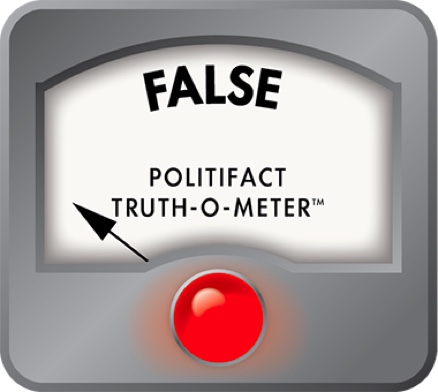
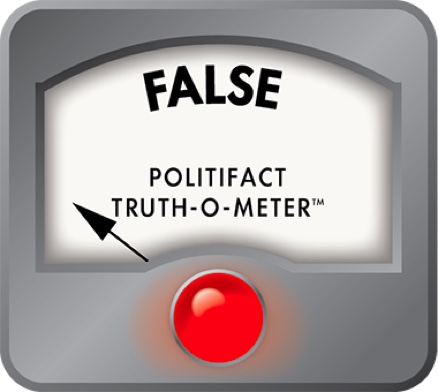
Trump’s statement is unsubstantiated. We rate it False.
Washington Office on Latin America, TO DATE: U.S. Maritime Attacks in the Caribbean and Eastern Pacific, accessed Feb. 23, 2026
Roll Call, Donald Trump Announces Efforts to Combat Drug Addiction, Jan. 29, 2026
U.S. Customs and Border Protection, Air and Marine Operations Statistics, accessed Feb. 23, 2026
PolitiFact, Fact-checking Donald Trump: Has each boat strike off the coast of Venezuela saved 25,000 lives?, Oct. 16, 2025
PolitiFact, Ask PolitiFact: Do rising fentanyl seizures at the border signal better detection or more drugs?, March 20, 2023
PolitiFact, Fact-checking Donald Trump's Davos speech on Greenland, US economy, Jan. 21, 2026
U.S. Coast Guard, Coast Guard sets historic record with amount of cocaine seized in FY25, Nov. 6, 2025
U.S. Coast Guard, U.S. Coast Guard marks 200,000 pounds of cocaine seized in Operation Pacific Viper, Feb. 5, 2025
Email interview, Elizabeth Dickinson, deputy program director for Latin America and the Caribbean at the International Crisis Group, Feb. 11, 2026
Email interview, Jonathan Caulkins, professor of operations research and public policy at Carnegie Mellon University, Feb. 6, 2026














In a world of wild talk and fake news, help us stand up for the facts.