
Our only agenda is to publish the truth so you can be an informed participant in democracy.
We need your help.

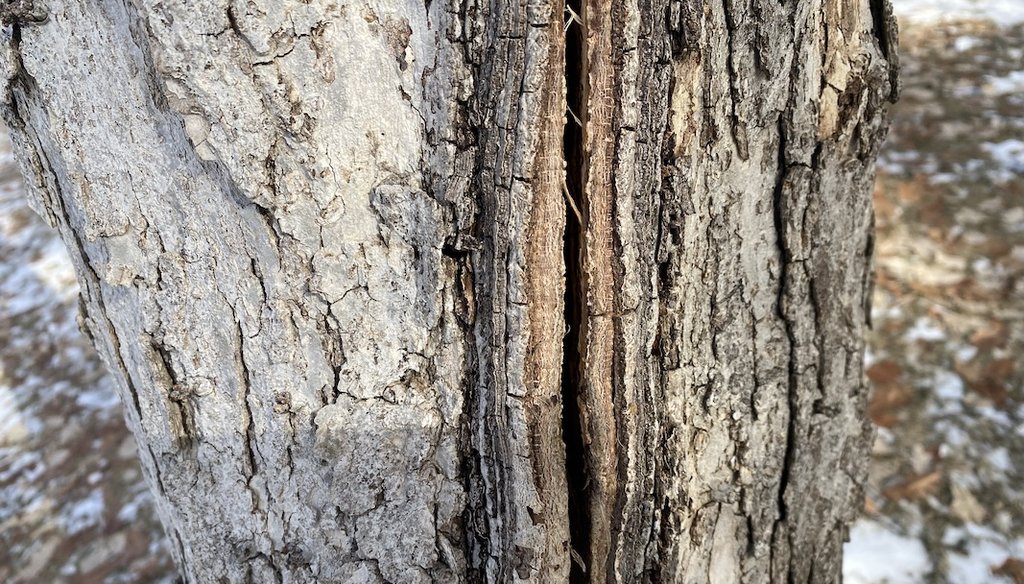
A frost crack is pictured on an oak tree on the University of Minnesota’s St. Paul Campus, Jan. 26, 2026. (Courtesy of Lee Frelich)

Social media posts warning of "exploding trees" in subzero temperatures are mischaracterizing a phenomenon known as frost cracks.
Frost cracks form when water inside trees freezes and expands. As a tree splits, the crack can sound like a gunshot, but the tree isn’t actually exploding.
Viral social media posts warned that trees in the upper Midwest might explode as a winter storm ushered in subzero temperatures across the U.S.
"EXPLODING TREES are possible in the Midwest and Northern Plains on Friday and Saturday, as temperatures are forecasted to fall 20 degrees BELOW zero," read a Jan. 20 X post with 11.8 million views as of Jan. 26.
The post referred to a real cold-temperature phenomenon, but tree experts clarified that people experiencing bitterly cold temperatures don’t also need to worry that trees will detonate around them, with bark and branches suddenly raining down.
When it gets extremely cold, water in a tree’s xylem — vascular tissue that transports water and minerals from the roots to the rest of the plant — freezes.
"When water freezes it expands," said John Seiler, a Virginia Tech professor and tree physiology specialist. "Sometimes the ice expansion causes the tree trunk to split open."
Those splits are known as frost cracks.
As an everyday example, think of what happens when someone leaves a can of soda in the freezer.
"Sometimes the can splits open, sometimes it doesn’t," Seiler said.
A tree’s frost cracks might be loud when they happen, but they aren’t dangerous to nearby people, critters or property.
"When trees split like this it doesn’t explode and send wooden shrapnel through the air," Seiler said. "They just pop open and it may almost sound like a gun."
That sound might be where the misnomer comes from, said Lee Frelich, the director of the University of Minnesota Center for Forest Ecology.
"If you hear a tree when it cracks, it sounds like a gunshot, and some people might interpret the sound as a small explosion," he said.
Trees don’t actually explode, but freezing conditions can cause frost cracks. When temperatures drop suddenly, water inside the tree expands and contracts faster than the bark can handle, causing the outer layer to split.
— Texas A&M Forest Service (@TXForestService) January 23, 2026
👉 Winter tree care: https://t.co/VQLSryleLI pic.twitter.com/D3od59qqK4
Forest ecologists and tree experts do not refer to trees that develop frost cracks as "exploding trees," experts told PolitiFact.
Weather forecasters have occasionally used the term, Frelich said. Seiler said he’d first heard it last week, when a student used it to describe what happens to trees in extreme cold.
Any species of tree can have frost cracks, Frelich said, but they’re common in oak, maple and linden trees that grow in cold climates such as Minnesota.
In many trees, the sap can reach very low temperatures without freezing solid, he said. That means frost cracks often don’t appear in healthy, mature trees with thick insulating bark unless temperatures reach -20 to -40 degrees or colder.
The cracks aren’t necessarily fatal. Many trees can heal frost cracks after a few years or live for decades with a large frost crack, Frelich said.
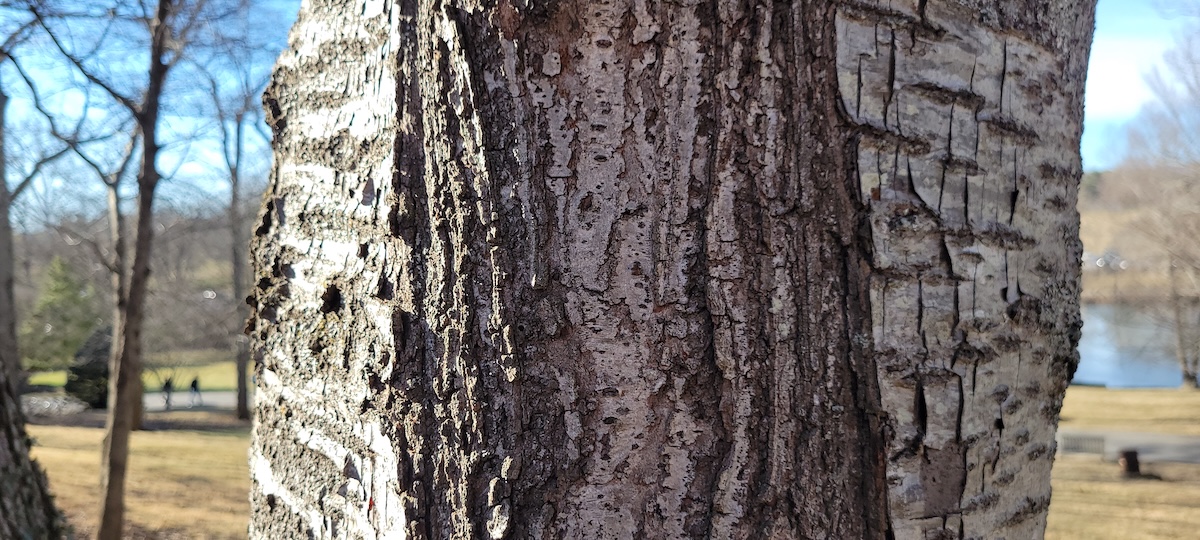
The wounds on this sweet cherry tree were caused by past frost cracks. (Courtesy of John Seiler)
Social media posts warned of "exploding trees" when temperatures drop to 20 degrees below zero.
In extreme cold, frost cracks can form when the water inside trees freezes and expands. As a tree splits, the crack can sound like a gunshot, which some people might confuse with a small explosion. But the tree isn’t actually detonating or sending wood shrapnel everywhere. Forest ecologists and tree experts don’t refer to this phenomenon as "exploding trees."
We rate this claim Mostly False.
Email interview with John Seiler, a Virginia Tech professor and tree physiology specialist, Jan. 26, 2025
Email interview with Lee Frelich, director of the University of Minnesota Center for Forest Ecology, Jan. 26, 2026
X post, Jan. 20, 2026 (Archived)
Texas A&M Forest Service’s X post, Jan. 23, 2026
Encyclopedia Britannica, xylem, accessed Jan. 26, 2026
CNN, What are ‘exploding trees’? The winter phenomenon may not be what you think, Jan. 23, 2026
Houston Chronicle, Fears of 'exploding trees' after an extreme freeze are overblown, Texas A&M experts say, Jan. 25, 202
















In a world of wild talk and fake news, help us stand up for the facts.