People with insurance through the Affordable Care Act will see a “75% increase in premiums starting Nov. 1” if enhanced subsidies are not extended, including “twice as much in the rural areas.”

Our only agenda is to publish the truth so you can be an informed participant in democracy.
We need your help.

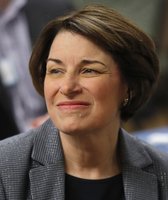
Sen. Amy Klobuchar, D-Minn., at the U.S. Capitol on June 17, 2025. (AP)

An analysis by the health care think tank KFF found that the disappearance of enhanced subsidies would increase out-of-pocket health care costs for people insured by the Affordable Care Act by an average of 79%, which is close to 75%.
Rural enrollees would pay more than twice as much out of pocket for their coverage than before the enhanced subsidies expire, according to an analysis by the Century Foundation, a left-of-center think tank.
The Century Foundation found that the increase in out-of-pocket costs for Affordable Care Act insurance wouldn’t be twice as much for rural enrollees when compared to enrollees in non-rural counties.
As Republicans and Democrats careened toward an Oct. 1 government shutdown, the parties clashed over whether to pass a clean extension of federal funding, as Republicans sought, or to extend expiring Affordable Care Act subsidies, as Democrats wanted.
In an interview on CBS’ "Face the Nation" — aired Sept. 28, three days before government funding was set to run out — Sen. Amy Klobuchar, D-Minn., said that if Republicans failed to extend the expiring subsidies, many Americans would see a big hit in their out-of-pocket health insurance costs.
Klobuchar said rural Americans, including farmers, would be hit disproportionately.
"Republicans have created a health care crisis," Klobuchar said. "My constituents, Americans, are standing on a cliff right now with these insurance premium increases that are upon them. So, Democrats are united in pushing on this and saying, look, let us do something about this crisis before it is too late — a 75% increase in premiums starting Nov. 1 on people who are small business owners, people who are farmers out there, twice as much in the rural areas."
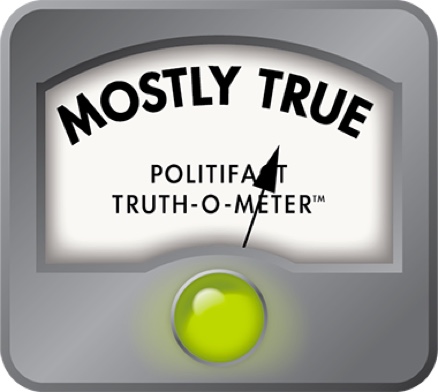
We previously rated the 75% talking point Mostly True. (The group that made that estimate subsequently upped it to 114%.)
Klobuchar’s "twice as much" comparison can be interpreted in more than one way. By one of those readings — the one her office said she intended, that rural enrollees would see their out-of-pocket costs double — Klobuchar is correct.
People who use the Affordable Care Act’s marketplaces can buy health insurance from providers at various levels of coverage and varying premium costs. Most purchasers obtain subsidies, as long as they meet the income guidelines.
In 2021, then-President Joe Biden signed legislation that made Affordable Care Act subsidies more generous. The law reduced the maximum amount purchasers would have to pay for coverage and enabled subsidies for households with incomes higher than 400% of the federal poverty level. Previously, the subsidies were capped at 400% of the poverty limit for a household. In 2024, that amounted to $60,240 for a one-person household. That figure increases depending on the number of people in the household.
Congress renewed these enhanced subsidies in 2022 through the end of 2025, so they are now poised to expire.
The subsidies proved popular. The number of people receiving them increased from 12 million in 2021 to 21.4 million in 2024, according to an analysis of federal data by KFF, a health care think tank.
Using 2024 federal data, KFF calculated the average annual premium for enrollees who received enhanced subsidies. The government paid $5,727 of the total premium under the original Affordable Care Act subsidy rules. Another $888 came out of the beneficiary’s pocket.
The enhanced subsidy provision covered the final portion, $705. If the enhanced subsidy disappeared and the enrollee had to pay both the $888 and the $705 amounts, that would total $1,593. That’s about 79% more than the same person was paying with the enhanced subsidies in place — close to Klobuchar’s 75% figure.
On Sept. 30, two days after Klobuchar’s remarks, KFF released a new estimate that showed an even higher out-of-pocket increase of 114%, superseding the group’s previous 79% figure.
There are at least two ways to interpret Klobuchar’s statement: that she was comparing rural enrollees' costs with people living elsewhere, or comparing their costs with what they paid before.
Klobuchar’s office told PolitiFact that the senator referred to rural enrollees’ out-of-pocket costs doubling compared with what they would pay with a continuation of enhanced subsidies. (That aligns with what Klobuchar has said in other settings.)
This is accurate, according to an analysis by the Century Foundation, which describes itself as a "progressive, independent think tank" and which Klobuchar’s office told PolitiFact is the source of her talking point about rural impact,
The Century Foundation analysis concluded that out-of-pocket insurance costs in rural counties would increase on average from $713 to $1,473 — a 107% increase, or slightly more than a doubling.
By contrast, the increase for people in urban counties was 89%.
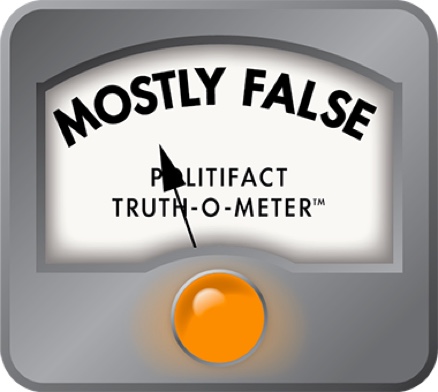
But there’s less evidence to support the interpretation some might have drawn from Klobuchar’s statement: that rural enrollees would experience a hit twice as big as enrollees elsewhere. The Century Foundation analysis found that’s not the case.
In its August analysis, the Century Foundation separated out the impacts of expiring subsidies by several demographic factors, including whether a county is predominantly rural.
The group found that enrollees in rural counties would, on average, see out-of-pocket increases of $760 from expiring enhanced subsidies, compared with $624 for all counties and $593 for urban counties. That means the rural increase would be 22% larger than the increase for enrollees overall, and 28% larger than the increase for urban enrollees.
That amounts to a disproportionately large increase for rural areas, but not twice as much.
Klobuchar said people with Affordable Care Act insurance will see a "75% increase in premiums starting Nov. 1," if enhanced subsidies are not extended, including "people who are farmers out there — twice as much in the rural areas."
A KFF analysis found that the disappearance of enhanced subsidies would increase out-of-pocket health care costs by an average of 79%, which is close to 75%. (KFF subsequently raised its estimate to 114%.)
A Century Foundation analysis found that the increase in out-of-pocket costs for Affordable Care Act insurance wouldn’t be twice as big for rural enrollees, which is one way to interpret Klobuchar’s comment. The rural cost increase would be 22% bigger than for enrollees overall and 28% bigger than for urban enrollees.
However, the way Klobuchar’s office said she intended the statement — that rural enrollees would pay twice as much out of pocket for their coverage than they did before an expiration of the enhanced subsidies — is accurate, because the study found that costs in rural counties would increase by 107%.
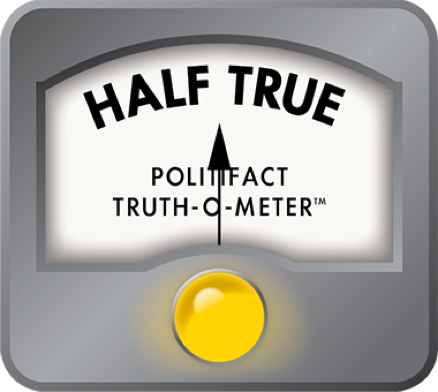
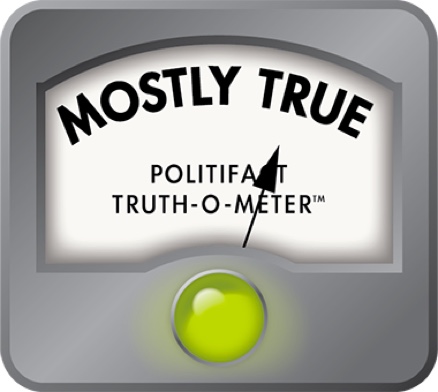
The statement is accurate but needs additional information, so we rate it Mostly True.
Amy Klobuchar, interview with CBS’ "Face the Nation," Sept. 28, 2025
Amy Klobuchar, X post, Sept. 24, 2025
Amy Klobuchar, X post, Sept. 26, 2025
Century Foundation, "An Updated County-Level Look at Imminent ACA Marketplace Premium Increases," Aug. 5, 2025
Century Foundation, "Rural Americans Face Unprecedented Price Hikes for Health Care," Aug. 19, 2025
KFF, "ACA Marketplace Premium Payments Would More than Double on Average Next Year if Enhanced Premium Tax Credits Expire," Sept 30, 2025
KFF, "Inflation Reduction Act Health Insurance Subsidies: What is Their Impact and What Would Happen if They Expire?" July 26, 2025
KFF, "Who Might Lose Eligibility for Affordable Care Act Marketplace Subsidies if Enhanced Tax Credits Are Not Extended?" March 3, 2025
KFF, "Marketplace Plan Selections with Financial Assistance," accessed Sept. 17, 2025
KFF, "How Much More Would People Pay in Premiums if the ACA’s Enhanced Premium Tax Credits Expire?" accessed Sept. 17, 2025
Drew Altman, "Explaining the Muddle on ACA Tax Credits," Sept. 3, 2025
KFF, "How much and why ACA Marketplace premiums are going up in 2026," Aug. 6, 2025
PolitiFact, "Yes, ACA subsidies cut and premium rise could mean your health insurance bill goes up 75%," Sept. 17, 2025
Email interview with Cynthia Cox, vice president and director of the program on the ACA at KFF, Sept. 29, 2025
Email interview with Jeanne Lambrew, director of health care reform and senior fellow at the Century Foundation, Sept. 29, 2025
Office of Amy Klobuchar, statement to PolitiFact, Sept. 30, 2025














In a world of wild talk and fake news, help us stand up for the facts.