“North Carolina has just approved a law permitting foreign doctors to practice without completing U.S. training or licensing exams.”

Our only agenda is to publish the truth so you can be an informed participant in democracy.
We need your help.

The loss of coronavirus pandemic-era Medicaid protections is expected to put millions of low-income Americans at risk of losing access to health care coverage. (Shutterstock)
Some North Carolinians are sounding the alarm about a new law that would make it easier for foreign-trained doctors to treat patients in rural parts of the state.
"North Carolina has just approved a law permitting foreign doctors to practice without completing U.S. training or licensing exams," said an Aug. 16 X post viewed 1.4 million times.
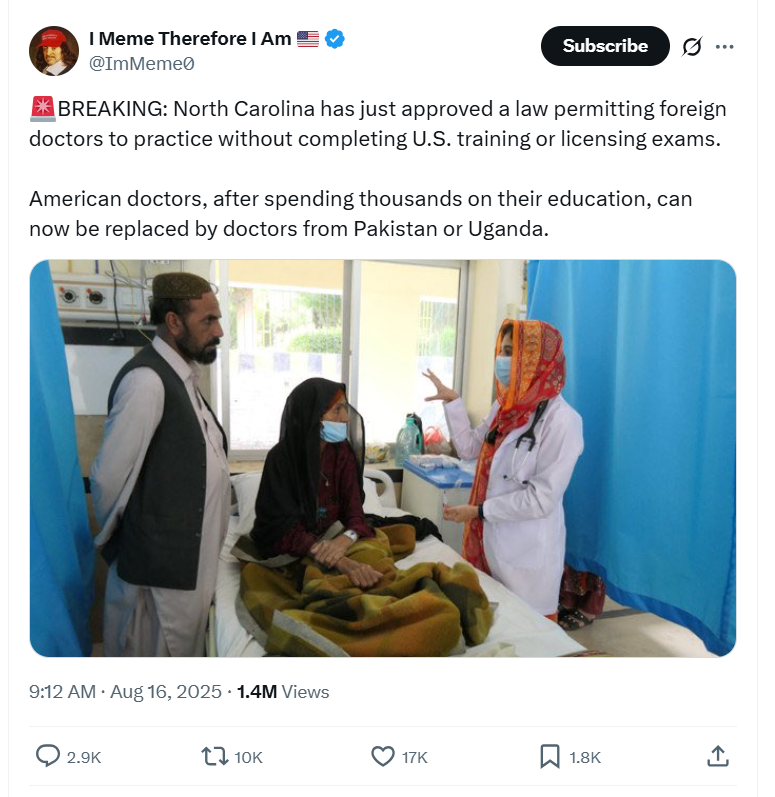
The X account that posted the claim has more than 700,000 followers and says it posts "parody at times." It didn’t respond to a request for supporting evidence. The post likely referred to a program created by House Bill 67, a 48-page state healthcare reform bill that Gov. Josh Stein signed into law on July 1 after it unanimously passed in the state’s House and Senate.
The law aims to boost the number of doctors in North Carolina’s rural areas, which it defines as counties with fewer than 500 people per square mile. It allows the North Carolina Medical Board to issue an "internationally-trained physician employee license" to immigrants who meet certain conditions.
The social media post, which was shared more than 10,000 times, prompted concern among other X users about foreign-trained doctors’ qualifications. It also led to social media spats between X users and some state lawmakers. But the basis for those concerns was faulty.
Ninety-three of North Carolina’s 100 counties have a shortage of primary care providers, according to 2024 data released this year by the state and federal governments.
The X post claimed that applicants could practice medicine "without completing U.S. training or licensing exams." That’s not true, according to the North Carolina Medical Board’s review of the law.
Let’s go through some of the eligibility requirements.
An applicant must have a job offer from a rural North Carolina hospital or medical practice where a fully-licensed physician must also practice on-site. An applicant can’t begin work in North Carolina until receiving legal approval, and they can’t obtain a full license to practice medicine until they practice in rural North Carolina for four years.
They must also have a current and active license in good standing to practice medicine in a foreign country or one that expired within the five years prior. They have to have completed 130 weeks of medical education at a school in the World Dictionary of Medical Schools.
So where do the U.S. exams come in?
Applicants must be eligible to be certified by the Educational Commission for Foreign Medical Graduates, a division of the Philadelphia-based medical-education nonprofit Intealth that verifies credentials, registration and licensing. To be eligible for certification by that commission, applicants must pass Step 1 and Step 2 of the three-step United States Medical Licensing Examination. Intealth refers to ECFMG certification as "a rigorous process, evaluating medical knowledge using the same examinations taken by U.S. medical school graduates."
The commission’s eligibility requirements aren’t spelled out in the bill, which may be why the required U.S. tests have gone overlooked by some who read it.
The first part of the exam assesses whether aspiring physicians can understand and apply important concepts of the sciences basic to the practice of medicine. The second part measures the applicant’s ability to apply medical knowledge and skills.
Some could argue that because applicants aren’t obtaining a full license from the commission, they aren’t "completing" an exam. The commission’s exam materials, though, refer to each of the steps as individual exams. And by completing those two alone, applicants qualify for ECFMC certification.
Applicants are also required to demonstrate "competency" to practice medicine. They could do this by passing tests administered by U.S.-based groups, such as the National Board of Medical Examiners, the United States Medical Licensing Examination, or the Federation Licensing Examination.
Or they could pass tests administered by international groups. The law says applicants can pass a licensing exam from certain countries that are members of the International Association of Medical Regulatory Authorities. They can also receive speciality board certification by the Royal College of Physicians and Surgeons of Canada or any other speciality certification group recognized by North Carolina’s Medical Board.
Jean Brinkley, a spokesperson for the North Carolina Medical Board, said any suggestion that the board would approve minimally-trained physicians is "patently absurd."
"We hold the keys to the kingdom pretty tightly in North Carolina," Brinkley told PolitiFact. "We’re going to make sure that anyone who is licensed to practice in North Carolina is competent."
The post said "North Carolina has just approved a law permitting foreign doctors to practice without completing U.S. training or licensing exams."
In order to qualify for an "internationally-trained physician employee license" from the North Carolina Medical Board, applicants must be eligible to be certified by the Educational Commission for Foreign Medical Graduates. That certification requires applicants to pass Step 1 and Step 2 of the United States Medical Licensing Examination.
The law doesn’t require applicants to obtain a license from the United States Medical Licensing Examination, so some could argue that applicants aren’t "completing" an exam. The commission’s exam materials, though, refer to each of the steps as individual exams. And by completing those two alone, applicants qualify for certification from the Educational Commission for Foreign Medical Graduates — a U.S.-based medical-education group that verifies credentials, registration and licensing.
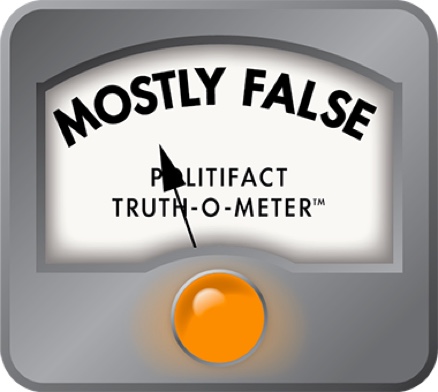
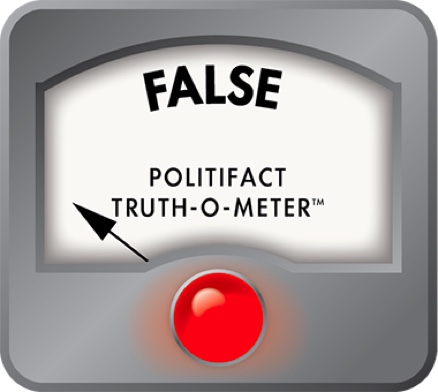
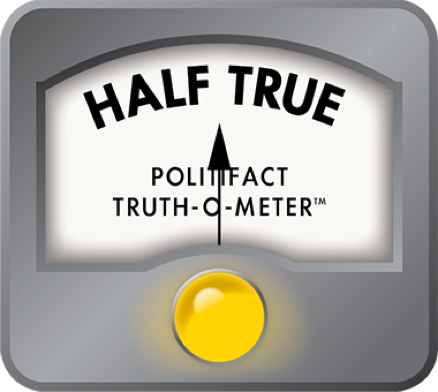
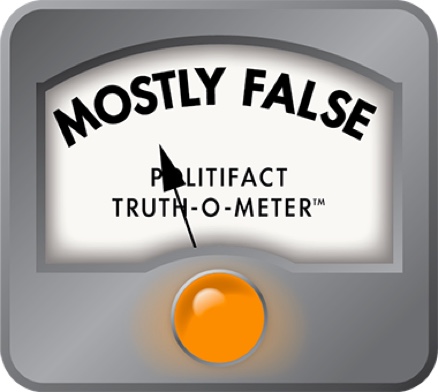
Overall, the post gives readers a misleading impression of the training required. We rate it Mostly False.
X post, Aug. 16, 2025.
North Carolina House Bill 67.
North Carolina Department of Health and Human Services report, "North Carolina Health Professional Shortage Area, 2024."
United States Medical Licensing Examination Bulletin of Information, 2026.
United States Medical Licensing Examination Content Outline.
Telephone and email interviews with Jean Brinkley, a spokesperson for the North Carolina Medical Board.
Telephone interview with North Carolina state Rep. Tim Reeder.
Telephone interview with North Carolina state Rep. Mike Schietzelt.
Telephone interview with North Carolina state Sen. Benton Sawrey.
Email correspondence with North Carolina state Rep. Grant Campbell.




In a world of wild talk and fake news, help us stand up for the facts.