
An ad from the government of Ontario, Canada, “misrepresents” President Ronald Reagan’s April 25, 1987, address about tariffs.


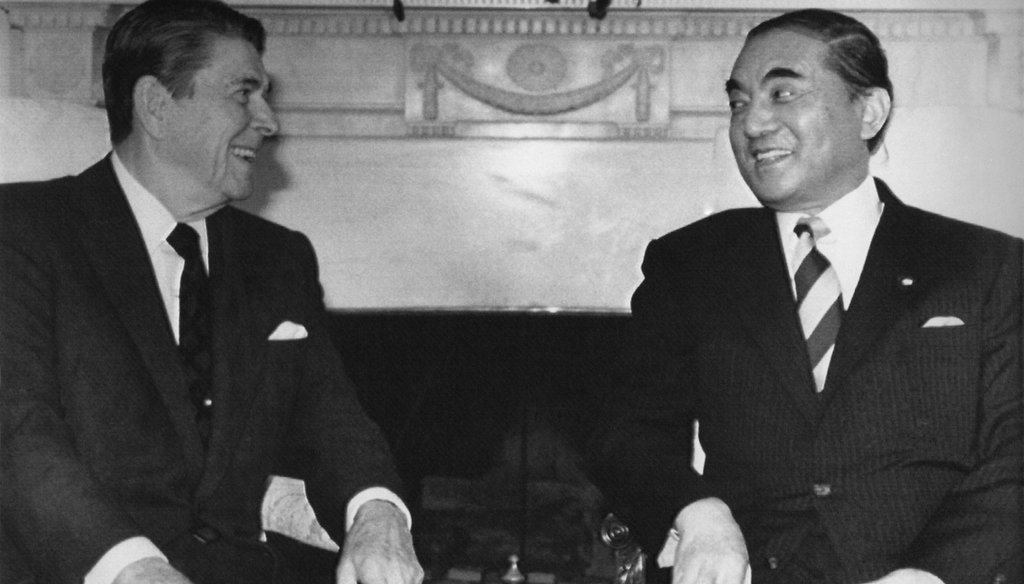
President Ronald Reagan, left, and Japanese Prime Minister Yasuhiro Nakasone begin two days of meetings in the White House Oval Office, on April 30, 1987 to discuss trade. (AP)


A one-minute government ad out of Canada’s Ontario province includes part of a 1987 address by President Ronald Reagan about tariffs and trade.
Overall, the ad’s message aligns with most of Reagan’s remarks, which, over five minutes, expressed a dim view of tariffs. Reagan said he believed that in the long term, tariffs would lead to trade wars and hurt Americans.
The ad did not present Reagan’s remarks in chronological order. It also omitted that during the same speech, Reagan said he was placing new duties on Japanese products because Japan had not enforced a trade agreement. He described this as a special case in which tariffs were justified.
After the government of the Canadian province of Ontario released an anti-tariff ad taking aim at U.S. trade policy, President Donald Trump said the United States was cutting off trade negotiations with its northern neighbor.
In an Oct. 23 Truth Social post, Trump referenced a statement from The Ronald Reagan Presidential Foundation and Institute.
Trump wrote, "The Ronald Reagan Foundation has just announced that Canada has fraudulently used an advertisement, which is FAKE, featuring Ronald Reagan speaking negatively about Tariffs." The Ronald Reagan Presidential Foundation and Institute is a nonprofit based in Simi Valley, Calif., created by Reagan to advance his legacy and principles.
The Reagan Foundation said the Canadian ad — which featured Reagan’s April 25, 1987, radio address — used "selective audio and video" and "misrepresents the Presidential Radio Address."
The one-minute ad included some of Reagan’s remarks out of chronological order. It also omitted that Reagan recorded the address after imposing duties on some Japanese products. A duty is a tax imposed on goods; a tariff is a type of duty imposed on imported or exported goods.
However, the ad’s overall message doesn’t misrepresent Reagan’s views on tariffs. Reagan said he believed that in the long-term tariffs would lead to trade wars and hurt Americans.
We asked the Reagan Foundation how the ad misrepresented Reagan’s address, but we did not receive a response by publication.
When we asked the White House what was fake about the ad, spokesperson Kush Desai said, "Even The Ronald Reagan Presidential Foundation and Institute is calling out Ontario’s misleading and selective editing of President Reagan’s remarks."
Ontario Premier Doug Ford said Oct. 14 that a $75 million ad buy was planned and would air on major networks. On Oct. 24 — after Trump canceled trade talks with Canada — Ford said the ad would continue to air during the first two World Series games but will pause after that, "so that trade talks can resume."
The ad shows Reagan delivering the address. In the ad, he says:
"When someone says, ‘Let’s impose tariffs on foreign imports,’ it looks like they're doing the patriotic thing by protecting American products and jobs. And, sometimes for a short while, it works, but only for a short time. But over the long run, such trade barriers hurt every American worker and consumer.
"High tariffs inevitably lead to retaliation by foreign countries and the triggering of fierce trade wars. Then the worst happens: markets shrink and collapse, businesses and industries shut down, and millions of people lose their jobs.
"Throughout the world, there's a growing realization that the way to prosperity for all nations is rejecting protectionist legislation and promoting fair and free competition. America’s jobs and growth are at stake."
Some sentences in the ad are not in the same order as Reagan delivered them, but the reordering did not change his meaning. (The sentence, "But over the long run, such trade barriers hurt every American worker and consumer," was actually delivered earlier in Reagan’s remarks. The ad also edited in the word "but." Reagan said, "And in a moment I'll mention the sound economic reasons for this: that over the long run such trade barriers hurt every American worker and consumer.")
Reagan framed the action against Japan as an unusual case of leveraging trade policies to counteract specific behavior by one trading partner on one group of products.
In another part of the address not quoted in the ad, Reagan said the actions involving "Japanese semiconductors were a special case" to "deal with a particular problem, not begin a trade war."
Reagan also said, "Now, imposing such tariffs or trade barriers and restrictions of any kind are steps that I am loath to take."
He said the result of a trade war would be "more and more tariffs, higher and higher trade barriers, and less and less competition. So, soon, because of the prices made artificially high by tariffs that subsidize inefficiency and poor management, people stop buying."
Like the address, Reagan’s overall trade record often supported free trade, but was at times nuanced.
Reagan pushed for several international free-trade agreements, including the 1988 U.S.-Canada Free Trade Agreement, which later incorporated Mexico and evolved into the North American Free Trade Agreement.
Reagan’s administration "launched the most comprehensive set of global trade-barrier-reducing negotiations yet completed — the Uruguay Round, which eventually established the World Trade Organization," I.M. Destler, a University of Maryland public policy professor, told us in 2016; Destler died in 2025. That negotiation continued under President George H.W. Bush and was concluded and ratified, with large bipartisan margins, under President Bill Clinton.
In a 1985 address to business leaders, Reagan said, "Our trade policy rests firmly on the foundation of free and open markets — free trade."
He also spoke about the merits and drawbacks of free trade. "I believe that if trade is not fair for all, then trade is free in name only," he said. "I will not stand by and watch American businesses fail because of unfair trading practices abroad. I will not stand by and watch American workers lose their jobs because other nations do not play by the rules."
Reagan sometimes bent to public pressure for more protectionist measures, as he did with Japanese semiconductors.
In 1982, Reagan imposed quotas on sugar, which resulted in higher prices. His administration negotiated more stringent provisions for textile and apparel imports, though not as tight as the industry wanted. And the administration set import quotas on machine tools from South Korea and imposed tariffs on Canadian lumber.
His most significant protectionist trade moves were a pair of "voluntary export restraints" on steel and on cars. These policies limited how many units foreign producers could ship to the United States, giving domestic producers some breathing room from foreign competition so they could retool their businesses. (The policies also raised prices for U.S. consumers and sometimes led to shortages.)
The Ronald Reagan Presidential Foundation and Institute said Ontario’s ad "misrepresents" Reagan’s 1987 address about tariffs.
The ad edits together some sentences from a 1987 address, and it leaves out that in the address, Reagan said he would levy duties on some Japanese products.
However, Reagan’s address framed the actions against Japan as exceptions to his general support of free trade, a position he championed not only in the parts quoted in the ad but also throughout much of the address.
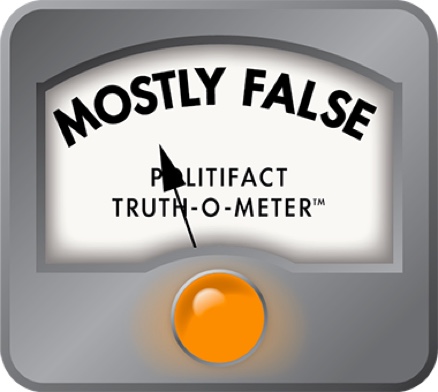
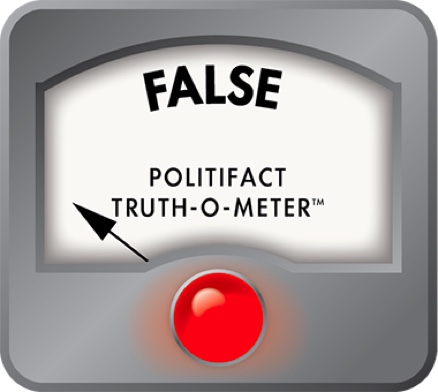
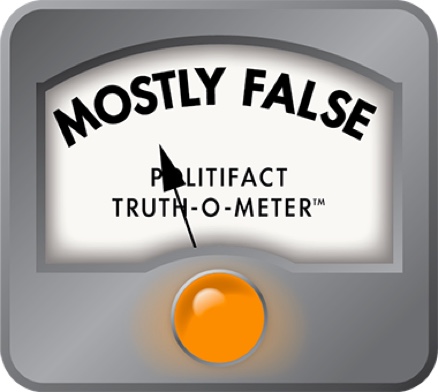
We rate this statement Mostly False.
RELATED: MAGA-Meter: Trump’s second term promises including about tariffs
RELATED: All of our fact-checks about trade
President Donald Trump, Truth Social, Oct. 23, 2025
President Donald Trump, Truth Social, Oct. 24, 2025
President Donald Trump, Truth Social, Oct. 24, 2025
President Donald Trump, Truth Social, Oct. 24, 2025
President Ronald Reagan, President Reagan's Radio Address on Free and Fair Trade and transcript, April 25, 1987
Ronald Reagan Presidential Foundation and Institute, X post, Oct. 23, 2025
Premier of Ontario Doug Ford, X post, Oct. 16, 2025
Premier of Ontario Doug Ford, X post, Oct. 24, 2025
Premier of Ontario Doug Ford, X post, Oct. 24, 2025
Premier of Ontario Doug Ford, Video, Oct. 14, 2025
Washington Post, Ronald to Donald: Trump’s moves highlight the GOP shift away from Reagan, March 9, 2025
SCOTUSblog, SCOTUStoday, Oct. 23, 2025
CBC, Ontario running $75M anti-tariff ads in U.S. aimed at Republicans, Oct. 14, 2025
PolitiFact, Donald Trump cites Ronald Reagan as a protectionist hero. Was he? July 1, 2016
PolitiFact, Donald Trump’s tariff powers face a high-stakes legal test, July 29, 2025
Email interview, Kush Desai, White House spokesperson, Oct. 24, 2025








In a world of wild talk and fake news, help us stand up for the facts.