Stand up for the facts!
Our only agenda is to publish the truth so you can be an informed participant in democracy.
We need your help.
I would like to contribute

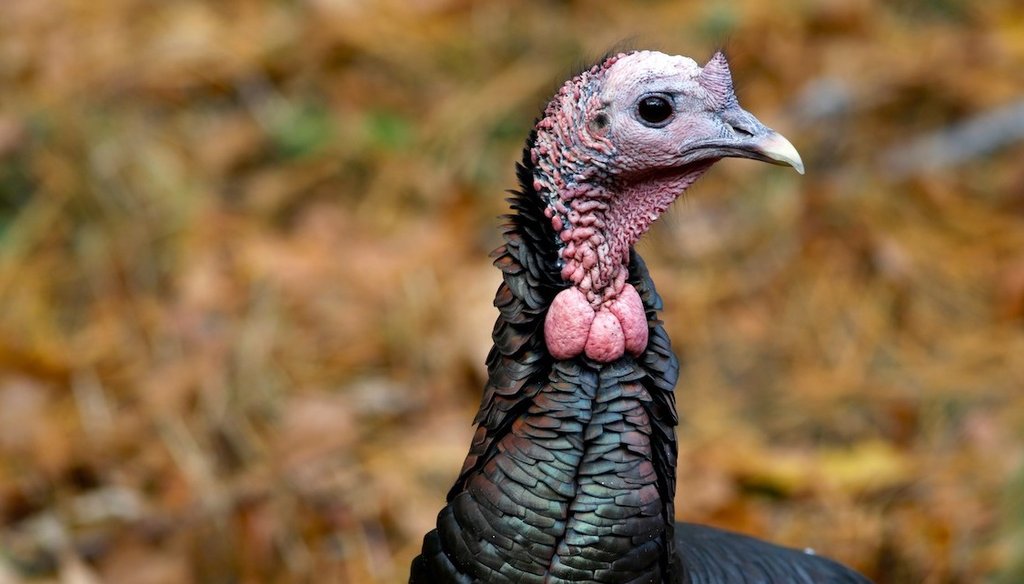
A wild turkey walks through a neighborhood in Portsmouth, N.H., Nov. 14, 2025. (AP)

Turkeys are supposed to go "gobble-gobble," not "Ah-CHOO!"
But bird flu is on the rise in the U.S. again.
The recent jump in cases might hike the price of your Thanksgiving, but it won’t make dinner unsafe. Cooking poultry to 165°F kills the virus. Plus, infected poultry is unlikely to appear in the food supply in the first place.
To ease your mind, here’s a quick flap through need-to-knows about bird flu ahead of the holiday week.
What is bird flu?
Bird flu, or avian influenza, is a naturally occurring disease among wild birds, including ducks and geese, that can also infect domesticated birds, such as chickens and turkeys.
The U.S. has been battling flu outbreaks in commercial poultry flocks since 2022. After a summer lull, cases are rising again. Because avian flu spreads quickly and is untreatable in animals, if even one bird in a flock is infected, the entire flock is culled.
The American Farm Bureau reported in October that since the beginning of the outbreak, 18.7 million turkeys were affected. Including chickens and other poultry, over 180 million birds across more than 1,800 flocks had been affected as of Nov. 20.
Bird flu raised wholesale turkey prices, retail price impact is unclear
The outbreak is pushing wholesale turkey prices higher. The U.S. Department of Agriculture’s latest Weekly National Turkey Report (yes, that’s a thing) from Nov. 14 lists the cost of a whole frozen turkey as $1.77 a pound for an 8 to 16 pound bird. That’s up from 97¢ per pound during the same week last year.
It’s less clear how that affects retail prices.
The American Farm Bureau’s annual Thanksgiving dinner survey found the average retail price for a 16-lb turkey was down 16% percent from last year, at an average of $1.34 per pound. This price drop, despite rising wholesale costs, might be from grocery stores offering Thanksgiving deals to draw consumers in. Retailers often treat turkeys as a "loss leader," which means companies accept losses on that item and make up the difference from customers’ purchases of other, higher-margin items.
Purdue’s Center for Food Demand Analysis & Sustainability, on the other hand, estimates the price will be higher than last year at $2.05 per pound, a 25% increase.
Prices for a turkey can vary by size, quality, and the store where you buy it, so shop wisely.
Cooked turkey is safe to eat
Unless you’re looking for an excuse to cancel, you can tell Aunt Marge turkey dinner is still on.
Cooking poultry and eggs to 165°F kills viruses, including bird flu. Assuming that your food is properly prepared and cooked, it’s safe to eat. This is also a reminder to thaw your turkey!
You should follow safe cooking guidelines no matter what, but there are other safeguards in place to prevent bird flu from entering the food supply.
Laws require that all meat and poultry sold commercially pass USDA safety inspection.
A USDA spokesperson told PolitiFact that inspectors are present at all federally regulated processing and slaughtering facilities. "Our inspectors verify that facilities maintain sanitary conditions, handle animals humanely, and that their food safety systems are working to prevent contamination with harmful bacteria like E. coli and Salmonella."
The USDA’s Food Safety and Inspection Service also samples and tests products to make sure they meet safety standards.
Can humans get bird flu?
Yes, but it’s rare. Infections can happen when the bird flu virus enters a person’s eyes, nose or mouth, or is inhaled.
But you can be infected only by an animal. There have been no cases of human-to-human transmission.
People who work with livestock are most at risk of contracting the virus. Since 2024, the CDC has confirmed 71 human cases in the U.S., resulting in one death. The CDC says the public health risk is still low.
Cows get bird flu, too
Since 2024, bird flu has also been detected in dairy cows and their milk. The USDA is monitoring the milk supply; the best way to stay safe is to drink pasteurized milk, not raw milk.
Pasteurization, which involves briefly heating milk to below boiling, kills bird flu and other viruses. Most grocery store milk and dairy products are pasteurized.
The USDA has found no evidence of the virus in the beef supply. Plus, a safety study the agency conducted found that even after injecting beef patties with high levels of the virus, cooking them to 145°F killed the virus.
So Happy Thanksgiving, tell Aunt Marge I said hi and order that meat thermometer!
Our Sources
Email statement from USDA spokesperson, Nov. 20, 2025
Centers for Disease Control and Prevention, "Bird Flu," accessed Nov. 21, 2025
Animal and Plant Health Inspection Service, "Avian Influenza," Nov. 17, 2025
Animal and Plant Health Inspection Service, "H5N1 and Safety of U.S. Meat Supply," Nov. 17, 2025
Food and Drug Administration, "Investigation of Avian Influenza A (H5N1) Virus in Dairy Cattle," March 14, 2025
Centers for Disease Control and Prevention, "Current Situation: Bird Flu in Dairy Cows," July 7, 2025
Centers for Disease Control and Prevention, "First H5 Bird Flu Death Reported in United States," Jan. 6, 2025
Centers for Disease Control and Prevention, "H5 Bird Flu: Current Situation," Nov. 14, 2025
Centers for Disease Control and Prevention, "Global Human Cases with Influenza A(H5N1), 1997-2025," Nov. 20, 2025
U.S. Department of Agriculture, "USDA Questions and Answers: Food Safety and Avian Influenza," April 2015
Centers for Disease Control and Prevention, "Food Safety and Bird Flu," Dec. 31, 2024
Center for Food Demand Analysis & Sustainability, "The Expected Cost of your Thanksgiving Turkey in 2025," Oct. 29, 2025
The American Farm Bureau, "Cost of Thanksgiving Dinner Declines," Nov. 19, 2025
USDA Agricultural Marketing Service, "Weekly National Turkey Report," Nov. 15, 2024
USDA Agricultural Marketing Service, "Weekly National Turkey Report," Nov. 14, 2025
Animal and Plant Health Inspection Service, "Confirmations of Highly Pathogenic Avian Influenza in Commercial and Backyard Flocks," accessed Nov. 20, 2025
The American Farm Bureau, "Turkey Farmers Brace for Uptick in HPAI," Oct. 1, 2025
Yale Medicine, "H5N1 Bird Flu: What You Need to Know," Jan. 7, 2025
ABC News, "1st US human bird flu case in 9 months confirmed with strain only seen in animals before," Nov. 14, 2025
CIDRAP, "CDC says avian flu may infect the gut, though risk is low," Sept. 9, 2025
NPR, "Bird flu surges among poultry amid a scaled back federal response," Nov. 6, 2025
PolitiFact, "Trump touted a 50% drop in egg prices. Wholesales prices have plunged, but retail prices lag behind," April 4, 2025
Cleveland Clinic, "Avian Influenza (Bird Flu): H5N1, Causes, Symptoms & Treatment," Dec. 5, 2024
PolitiFact, "Karoline Leavitt blames Biden for egg shortage, but killing infected birds was Trump’s policy, too," Jan. 30, 2025
PolitiFact, "Bird flu: What to know about latest outbreaks after U.S. reports first severely infected person," Dec. 19, 2024
International Dairy Foods Association, "Pasteurization," accessed Nov. 21, 2025
PolitiFact, "President Donald Trump misleads about Walmart Thanksgiving dinner price comparison," Nov. 14, 2025
Scripps News, "Cheaper turkeys this Thanksgiving? Here’s the grocery store trick behind it," Nov. 19, 2025
National Chicken Council, "Questions And Answers On Avian Influenza," accessed Nov. 21, 2025
Food Safety and Inspection Service, "Inspection of Meat Products," accessed Nov. 21, 2025
Food Safety and Inspection Service, "Poultry Products Inspection Act," accessed Nov. 21, 2025
Browse the Truth-O-Meter
More by Grace Abels