Get PolitiFact in your inbox.

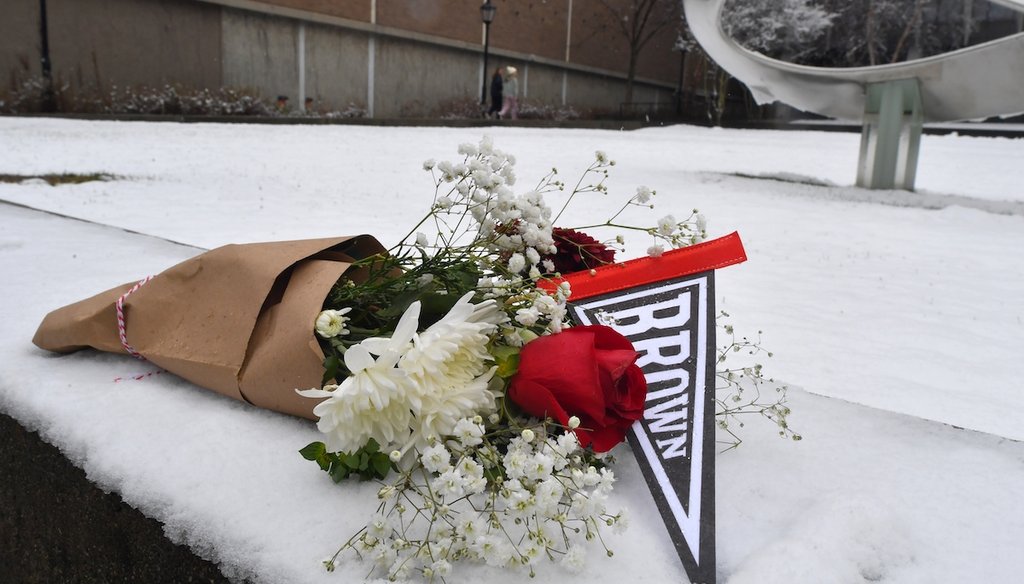
A bouquet of flowers rests on snow, Sunday, Dec. 14, 2025, on the campus of Brown University not far from where a shooting took place, in Providence, R.I. (AP)
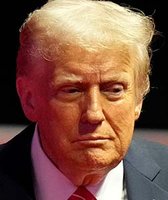
In a weekend punctuated by tragic events, President Donald Trump quickly shared what he knew, even if his information ultimately proved to be wrong.
On Dec. 13, after a gunman opened fire at Brown University, killing two and injuring nine before evading capture, Trump posted on Truth Social that "the FBI is on the scene. The suspect is in custody." But about 20 minutes later, Trump posted an update: "The Brown University Police reversed their previous statement — The suspect is NOT in custody."
At the time, members of the Brown community in Providence, Rhode Island, were sheltering in place and seeking guidance on safety. A Brown student pushed back on the president’s assertion: "I am at brown university they have not confirmed a shooter in custody please do not believe trump and stay inside."
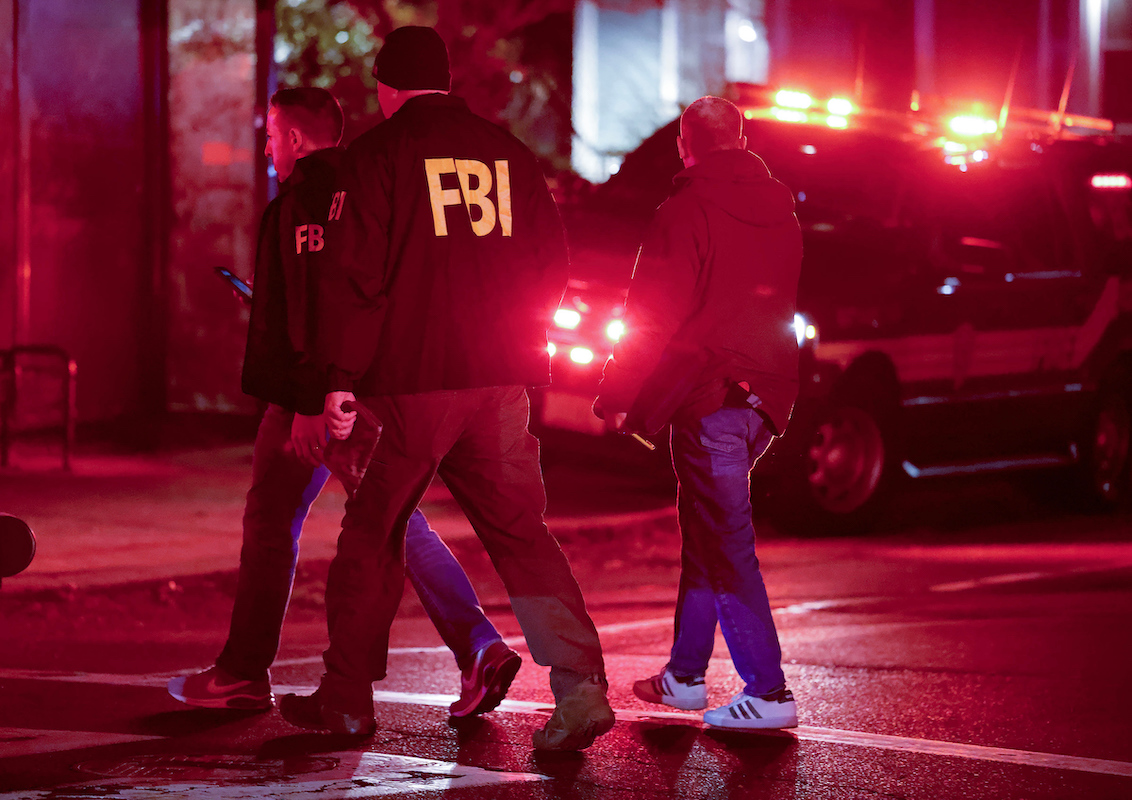
Emergency personnel gather on Waterman Street at Brown University in Providence, R.I., on Saturday, Dec. 13, 2025, during the investigation of a shooting. (AP)
On Dec. 15, the morning after Hollywood director Rob Reiner and his wife, Michele, were discovered slain in their home, Trump posted on Truth Social that the killing was "reportedly due to the anger (Rob Reiner) caused others through his massive, unyielding, and incurable affliction with a mind crippling disease known as TRUMP DERANGEMENT SYNDROME."
Soon after, police arrested the couple’s son, Nick, on suspicion of murder. Nick Reiner has spoken in the past about his struggles with drug addiction and homelessness. Police said nothing about motive and did not mention the director’s political ideology.
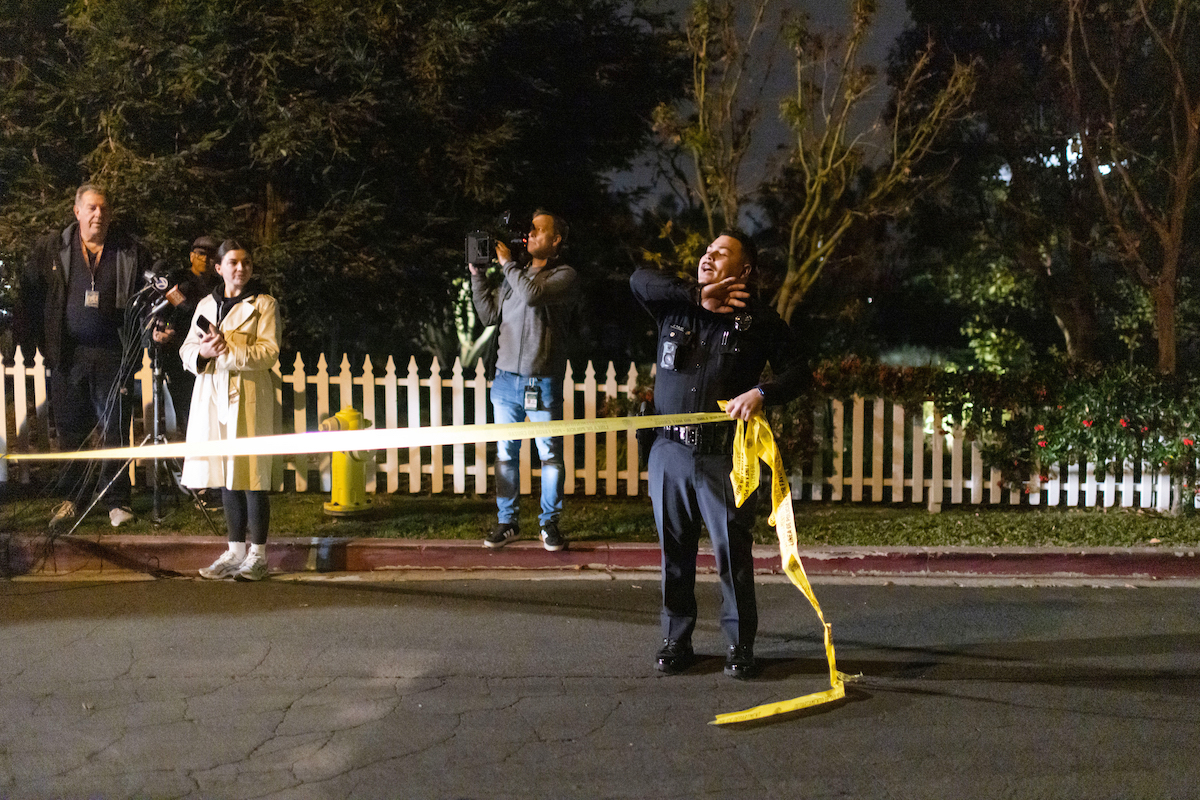
A police officer blocks off a street near Rob Reiner's residence Sunday, Dec. 14, 2025, in the Brentwood section of Los Angeles. (AP)
Trump’s posts echoed those of other senior government officials who similarly took post-first, confirm-the-facts-later approaches to recent, high-profile breaking news.
-
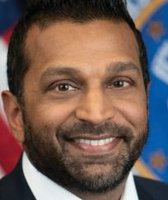
A few hours after conservative advocate Charlie Kirk was assassinated in Utah on Sept. 10, FBI Director Kash Patel posted on X that the suspect "is now in custody." But less than two hours later, Patel, a Trump appointee, posted that the suspect had been released after interrogation. The man eventually charged with murdering Kirk was not arrested until more than 24 hours later.
-
About 45 minutes after an assailant shot two West Virginia National Guard members on patrol in Washington, D.C., on Nov. 26, West Virginia Gov. Patrick Morrisey posted on X that one Guard member had died. Ten minutes later, he posted that both had died. About 20 minutes after that, he backtracked, citing "conflicting reports." One Guard member ultimately died, but one has survived.
Fast-moving investigations often zig and zag in unexpected ways, especially when the suspect is not immediately arrested, as was the case in all but the Washington, D.C., shooting.
Law enforcement is trained to work carefully and under chaotic conditions to minimize further harm to bystanders and the public when investigations are still unfolding. That’s why law enforcement investigators historically speak through formal media briefings, where they can parcel out confirmed information and tamp down speculation.
But in a social media-driven age that rewards being first over being accurate, government officials like Trump and Patel are supplanting the traditional filters of formal press events, feeding online speculation. The result is a media environment awash with confusion and claims, some of them that prove to be wrong.
"Occasionally, news outlets have published background leaks from law enforcement that turned out to be false and then had to walk them back," said Mark Feldstein, a University of Maryland journalism professor and former investigative correspondent for outlets including ABC News. "Never that I know of has the president of the United States or the director of the FBI attached his name publicly to information about a pending criminal case that turned out to be so wildly inaccurate."
Feldstein said the sharing of such information "undermines confidence in the individual and institutions putting out the inaccurate information, especially in such high-profile cases that attract so much attention."
Juliette Kayyem, who worked in Homeland Security during the Obama administration, said there is no public safety reason for the FBI director to tweet before an indictment.
"The FBI director is the bridge between a nonpublic investigation and disclosure of a successful investigation," she said. "There is no need to hear from the FBI director between those two points. Stop tweeting."
Luke Hunt, a former FBI agent who is now a University of Alabama philosophy professor, said posts by the nation’s FBI director are especially concerning.
"The FBI director — unlike the president — is not supposed to be a politician," Hunt said in an email. "We historically do not expect rash, impulsive statements from our top law enforcement officials. We expect a patient search for evidence leading to truth. But now I think we are starting to view the FBI director's posts similar to the president's. We take what he says with a grain of salt because we have come to expect the posts to be steeped in impatience and political expedience."
Trump’s tack is not new for him, at least. In 2020, during his first term, Trump tweeted a baseless conspiracy theory that a 75-year-old man in Buffalo who had been recorded being pushed to the ground during a protest was actually a plant by anti-fascist demonstrators.
Democrats have also shared information prematurely. In 2021, Fort Lauderdale, Florida, Mayor Dean Trantalis, a Democrat, called a car crash during nearby Wilton Manors’ gay pride parade a "terrorist attack against the LGBT community." Police later said the crash was an accident, and Trantalis, the city’s first openly gay mayor, said he regretted calling it a terrorist attack but said he felt terrorized by the event.
Sometimes officials scoop the investigators on the scene by sharing initial bits of information that are ultimately supported by other evidence. Even this poses risks.
Hours after a shooter fired on an Immigration and Customs Enforcement facility in Dallas on Sept. 24, killing two and injuring one before killing himself, Patel posted an image of five ammunition shells on X, one of which was labeled with the text "ANTI ICE."
Patel wrote that "while the investigation is ongoing, an initial review of the evidence shows an idealogical (sic) motive behind this attack." His disclosure came shortly after a local press conference in which the casing messages were not mentioned.
Although other evidence ultimately supported that motive, Patel veered from the norm when he released raw evidence so early in the investigation — something experts say carries risks.
When government officials prematurely release unconfirmed or inaccurate information, their actions can complicate subsequent prosecutions by providing jurors with alternate suspects and introducing reasonable doubt. They can expose the government and media outlets to legal risks, including payouts to people wrongly accused.
The most famous example is Richard Jewell, an early suspect in the 1996 Atlanta Olympics bombing. Jewell "was intimately cleared but suffered damages until the government announced his innocence," said Stanley Brand, a distinguished fellow in law and government at Penn State Dickinson Law. Then-Attorney General Janet Reno publicly apologized, and Jewell secured settlements from multiple media outlets who had reported on him in connection to the bombing.
As law enforcement officials investigating the Brown shooting questioned someone they called a "person of interest," some media outlets reported the person’s name, often citing unnamed law enforcement sources. After the person was released and the investigation went in a different direction, Rhode Island Attorney General Peter Neronha told reporters during a press conference that "what is really unfortunate is that this person's name was leaked to the public. It's hard to put that back in the bottle."
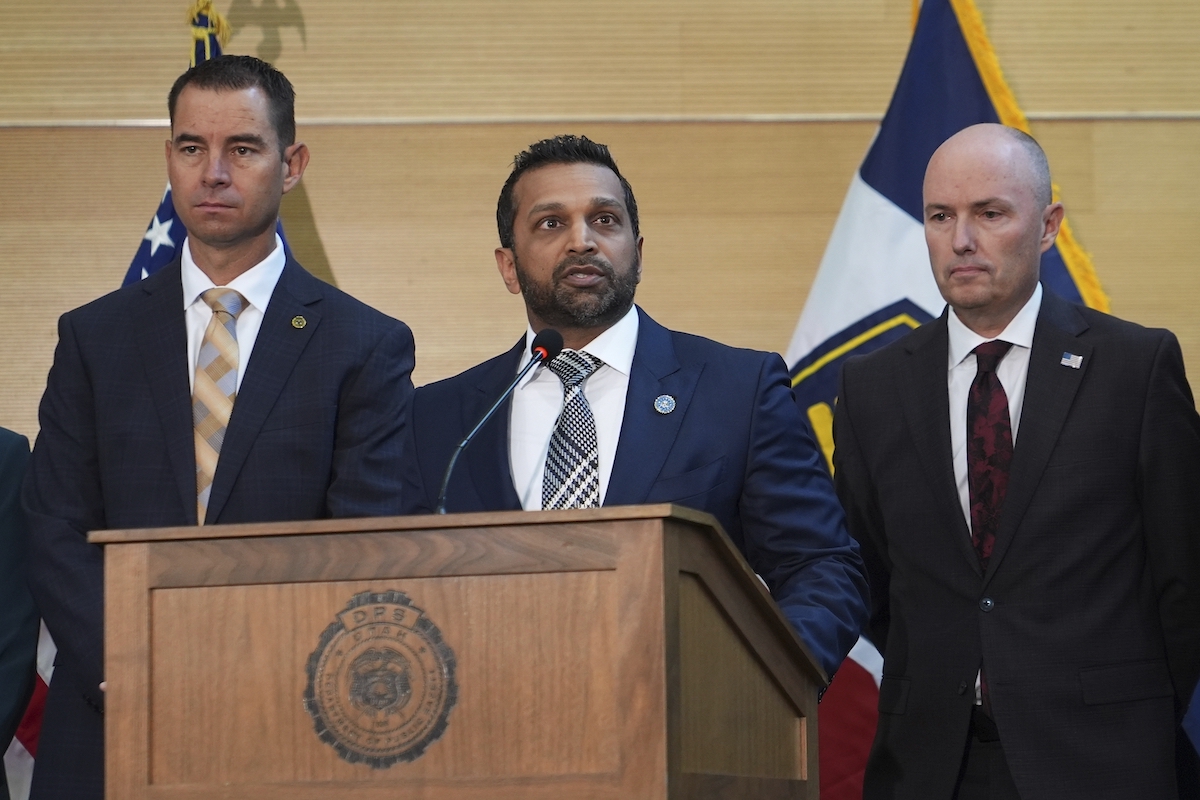
Kash Patel speaks at a news conference, Friday, Sept. 12, 2025, in Orem, Utah, as Utah department of public safety commissioner Beau Mason, left, and Utah Gov. Spencer Cox listen. (AP)
Days after Kirk’s assassination, Patel told "Fox and Friends" that he had no regrets over his decision to release information about a suspect even though it quickly proved incorrect.
"I was being transparent with working with the public on our findings as I had them," he said. "I stated in that message that we had a subject and that we were going to interview him, and we did, and he was released," Patel said.
"Could I have worded it a little better in the heat of the moment, sure," Patel said. "But do I regret putting it out? Absolutely not. I was telling the world what the FBI was doing as we were doing, and I’m continuing to do that."
PolitiFact News Researcher Caryn Baird contributed to this report.
Our Sources
FBI director Kash Patel, X post, Dec. 14, 2025
FBI director Kash Patel, X post, Sept. 10, 2025
President Donald Trump, Truth Social post, Dec. 13, 2025
President Donald Trump, Truth Social post, Dec. 13, 2025
President Donald Trump, Truth Social post, Dec. 15, 2025
Roll Call factbase, Speech: Donald Trump Addresses a White House Christmas Reception, Dec. 14, 2025
Brown University, Crime alerts and emergency information, Dec. 13-14, 2025
NBC 10 WJAR, Authorities say person of interest detained in Brown University shooting will be released, Dec. 14, 2025
X user, Post, Dec. 13, 2025
Clip of Providence, Rhode Island press conference, Dec. 13, 2025
Politico, Patel says he doesn’t regret prematurely announcing suspect in Kirk killing was in custody, Sept. 15, 2025
Fox and Friends, Kash Patel: FBI has uncovered 'shocking' evidence in Kirk assassination investigation, Sept. 15, 2025
PBS, WATCH: Patel defends social media post about Kirk ‘subject’ during Senate hearing, Sept. 16, 2025
NPR, Ex-Homeland Security official talks about mass shooting at Brown University, Dec. 15, 2025
NBC6, Fort Lauderdale Mayor Regrets Calling Wilton Manors Pride Parade Crash a ‘Terrorist Attack' June 21, 2021
Washington Post, Man drives through Florida Pride parade, killing one. Authorities say it was an accident. June 22, 2021
People, Rob Reiner's Son Nick Reiner: I Lived on the Streets Battling Drug Addiction, Update Dec. 15, 2025
Los Angeles Police Department, X post, Dec. 14, 2025
PolitiFact, Live blog: Fact-checking Kash Patel, Tulsi Gabbard and RFK Jr. confirmation hearings, Jan. 30, 2025
Email interview with Juliette Kayyem, Belfer Senior Lecturer in International Security at Harvard and President Obama’s Assistant Secretary for Intergovernmental Affairs at the Department of Homeland Security, Dec. 15, 2025
Email interview with Luke William Hunt, associate professor at the University of Alabama, Dec. 15, 2025
Email interview with Stanley Brand, distinguished fellow in law and government at Penn State Dickinson Law School, Dec. 15, 2025
Email interview with Mark Feldstein, University of Maryland journalism professor, Dec. 15, 2025
Browse the Truth-O-Meter
More by Louis Jacobson