
“Nearly 27% of all homes sold in the first quarter of 2025 were bought by investors.”


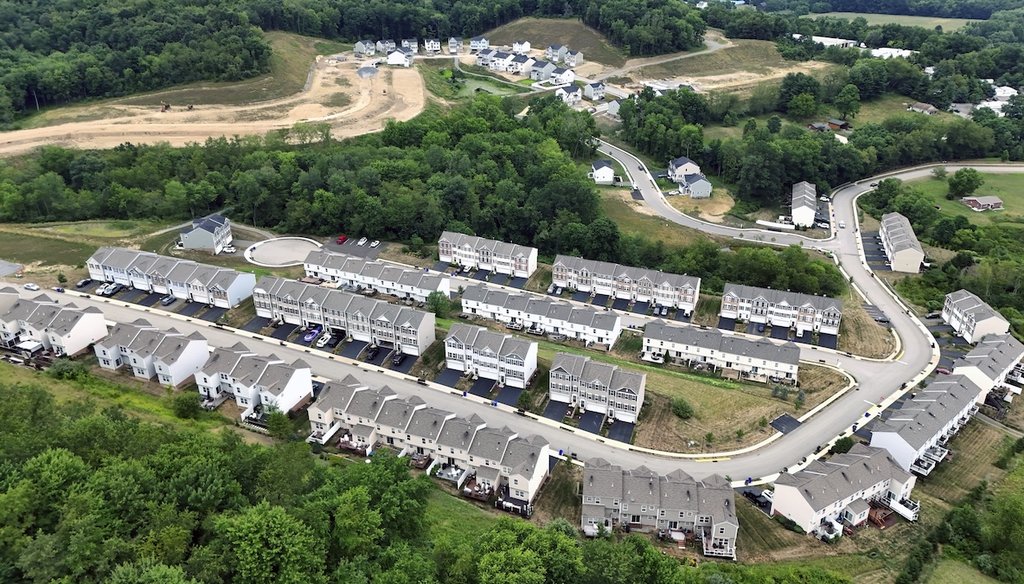
A new housing development in Jackson Township, Pa., on July 11, 2024. (AP)


This percentage is credible for new sales, but the talking point exaggerates the overall share of housing in investors’ hands and who owns them.
Data shows that small-scale, "mom and pop" investors account for a far greater share of investor-owned units than Wall Street firms do, and the combination of the two remains a distinct minority of all units. And large-investor holdings are primarily an issue in about 20 large metropolitan areas, not the nation as a whole.
Are more than a quarter of homes being bought by Wall Street investors, rather than people looking to make them their primary residence? Rep. Josh Riley, D-N.Y., recently said so.
In a press release about legislation he’s sponsoring to stop Wall Street investors from buying up homes, he wrote, "Families in Upstate New York shouldn’t have to compete with Wall Street hedge funds just to buy a home. But that’s exactly what’s happening — big investors are swooping in, buying up houses, and pricing out regular families who’ve been working hard and saving up."
Riley went on to write that "nearly 27% of all homes sold in the first quarter of 2025 were bought by investors," citing a CBS MoneyWatch article that, in turn, referred to data by the real estate firm BatchData.
Riley’s office did not reply with supporting evidence beyond what was in the press release. BatchData did not respond to inquiries for this article. But housing experts expressed caution about overinterpreting Riley’s data point.
Experts pointed out three issues with Riley’s talking point.
One has to do with who these "investors" are. In the press release, Riley framed the buyers as "Wall Street hedge funds." But experts said such buyers are outnumbered by individuals and families investing on a much more limited scale.
"The purchasing activity of small-scale, ‘mom and pop’ investors accounts for most of the current increase" in investor-owned single family rentals, the Federal Reserve Bank of St. Louis wrote in an October 2025 analysis.
An analysis by the American Enterprise Institute, a conservative think tank, found that large institutional investors — those owning 100 or more properties — held roughly 1% of the nation’s single-family housing stock. By contrast, smaller investors, with two to nine properties, held about 11%, the analysis found.
In other words, the combination of the two would account for about 12% of holdings, collectively accounting for a distinct minority of units.
A second issue is that Riley cited a data point for new sales, rather than the total accumulated ownership rate. This means the 27% figure, covering new sales, overstates the extent of units in investors’ hands overall.
The Government Accountability Office, an investigative arm of Congress, reported in 2024 that large-scale institutional investors own roughly 2% of the single-family rental housing stock nationally.
The Federal Reserve Bank of St. Louis analysis aligns with the American Enterprise Institute and Government Accountability Office assessments, concluding that investor-owned units "form a small fraction of the national" market for single family rentals.
Carl Goertemoeller, executive director at the University of Cincinnati Real Estate Center, agreed, telling PolitiFact New York that he would be "shocked to observe 27% nationwide."
Don Haurin, an emeritus Ohio State University economics professor, said that despite recent growth, "the ownership of the stock of housing by investors is much lower than 27%."
A third issue concerns regional variation. The Federal Reserve analysis said "large-scale, ‘institutional’ investors exert considerable influence in the 20 largest U.S. metropolitan areas, where they primarily operate," but not as much outside those markets.
The Government Accountability Office estimated that institutional investors own 25% of Atlanta’s single-family rental housing market, 21% in Jacksonville, Florida, 18% in Charlotte, North Carolina, and 15% in Tampa, Florida.
Riley said, "Nearly 27% of all homes sold in the first quarter of 2025 were bought by investors."
This percentage is credible for new sales, but the talking point exaggerates the overall share of housing in investors’ hands and who owns them.
Data shows that small-scale, "mom and pop" investors account for a far greater share of investor-owned units than Wall Street firms do, and the combination of the two remains a distinct minority of all units. And large-investor holdings are primarily an issue in about 20 large metropolitan areas, not the nation as a whole.
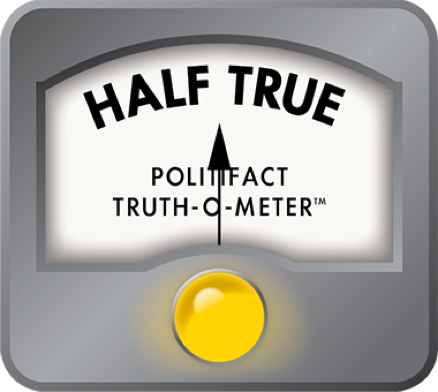
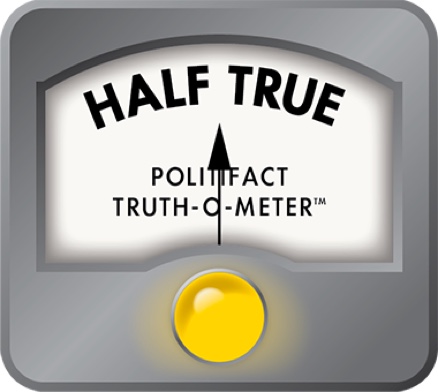
The statement is partially accurate but leaves out important context, so we rate it Half True.
Josh Riley, "Riley Introduces Bipartisan Bill to Stop Wall Street from Buying Up Affordable Housing," Jan. 8, 2026
Batch Data, "Investor Market Share Soars as Traditional Buyers Retreat," accessed Feb. 5, 2026
Harvard University Joint Center for Housing Studies, "8 Facts About Investor Activity in the Single-Family Rental Market," July 18, 2023.
American Enterprise Institute, "Single-Family Rentals: The Unintended Consequences of Subsidizing Small Investor Loans," Feb. 9, 2026
Government Accountability Office, "GAO Releases Report on Institutional Investments in Single-Family Rental Housing," May 28, 2024
Federal Reserve Bank of St. Louis, "The Role of Single-Family Rentals in the U.S. Housing Market," Oct. 31, 2025
CBS, "Real estate investors are purchasing more U.S. homes as high prices lock out would-be buyers," July 8, 2025.
Email interview with Don Haurin, emeritus Ohio State University economics professor, Feb. 10, 2026
Email interview with Carl Goertemoeller, executive director at the University of Cincinnati Real Estate Center, Feb, 9, 2026














In a world of wild talk and fake news, help us stand up for the facts.