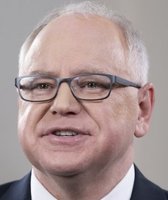

Under Michigan Gov. Gretchen Whitmer, there are “fewer families living in poverty” than under her predecessor.

Our only agenda is to publish the truth so you can be an informed participant in democracy.
We need your help.

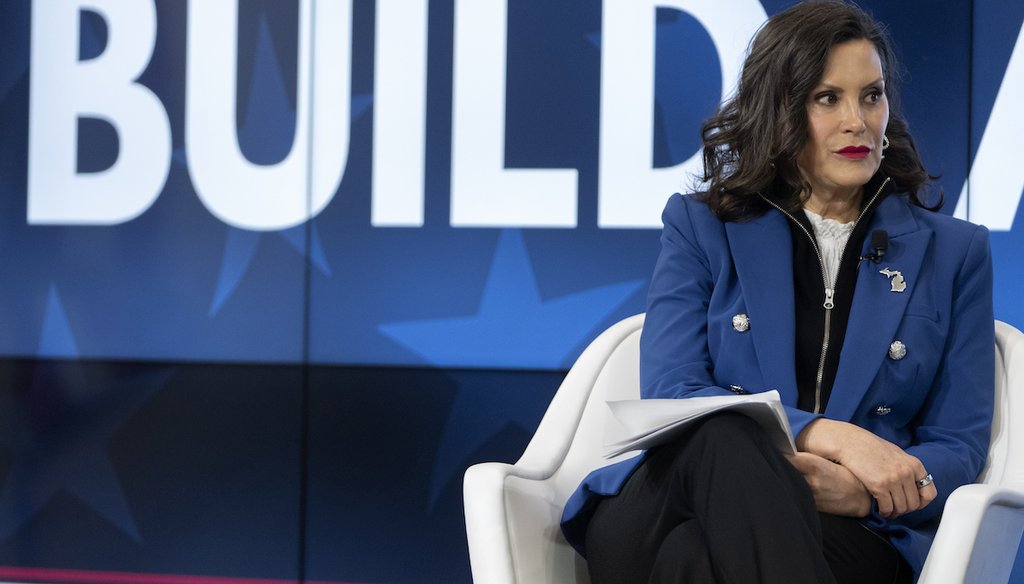
Michigan Gov. Gretchen Whitmer speaks with former television journalist Gretchen Carlson, not shown, at an event on April 9, 2025, in Washington. (AP)
The poverty rate under Michigan’s Democratic governor, Gretchen Whitmer, has ranged from 13.1% to 13.5%. The state’s poverty rate remains higher than the national average.
The rate is lower than it was under her Republican predecessor, Gov. Rick Snyder. But it dropped during Snyder’s tenure from a high of 17.5% in 2012 to 14% in 2018.
Michigan’s poverty rate declines mirror national trends.
Michigan Gov. Gretchen Whitmer, a potential Democratic presidential candidate, recently wrote about her accomplishments as she enters her final year leading the state.
"Our approach has led to some pretty remarkable results," Whitmer wrote in a Feb. 2 Substack entry. "Free pre-K, community college, and school meals for all. Fewer families living in poverty."
Her statement taps into Americans’ concerns about affordability, which could be a key issue for voters in the midterm elections, including a competitive U.S. Senate contest in Michigan. President Donald Trump’s pledge to reduce prices for groceries, cars and other items is Stalled on our MAGA-Meter, which tracks his campaign promises.
Michigan’s poverty rate declined during Whitmer’s tenure. The drop mirrored national trends, and most of the decline began under her predecessor. Whitmer’s spokesperson pointed to anti-poverty measures during her tenure as the reason for the decline. Experts said poverty rates are affected by numerous factors, not only one governor’s policies.
Whitmer was referring to a decline in the state’s poverty rate compared with what she inherited from her predecessor, Republican Gov. Rick Snyder, Whitmer’s political strategist told PolitiFact.
In 2011, when Snyder took office, about 17% of Michigan residents lived in poverty. It peaked at 17.5% in 2012, then fell to 14% during Snyder’s final year in office in 2018, according to U.S. Census Bureau data analyzed by KFF, a nonpartisan health policy think tank.
During Whitmer’s tenure, which began in 2019, the rate hovered between 13.1% and 13.5% in 2024, the most recent year available. (There is no 2020 data because of the coronavirus pandemic’s significant data collection disruptions.)
The official U.S. Census Bureau poverty measure totals a household's income and compares it with a threshold for the household's size and age composition, Kristin S. Seefeldt, a University of Michigan social work associate professor, said. If the household’s income is below that threshold the household is considered to be living in poverty. Many experts say the threshold is outdated, but it’s still widely used.
The U.S. Census Bureau's nationwide poverty threshold for a family of two adults and one child was $25,249 in 2024.
Rates are often the most useful measure of changes because they take into account population changes. However, in sheer numbers, there were more people living in poverty in Michigan (and the nation) in 2024 than 2019. In Michigan, there were about 1.28 million in poverty in 2019 and 1.34 million in 2024.
However, a comparison of poverty rates under two governors doesn’t provide a full picture.
Michigan’s declining poverty rate under both Whitmer and Snyder matches a national trend. The national poverty rate was 15.9% in 2011 and declined most years, ending at 12.1% in 2024.
During economic downturns, Michigan tends to get hit harder and experience longer recessions than even neighboring states, mainly because of its transition from a manufacturing-based economy to a service-based economy, said Nicholas Hess and Patrick Schaefer at the Michigan League for Public Policy, a nonprofit policy institute. That typically puts the state’s poverty rate higher than the national average.
There is usually a lag between the end of a recession and a drop in the poverty rate.
"One could argue that due to the Great Recession (of 2008 and 2009) the Snyder administration was at a much different starting point," Seefeldt said. "Or, one might say that Snyder didn't do enough to bring down poverty rates as the economy recovered. But the trend data alone don't let us say either definitively."
Charles L. Ballard, a Michigan State University economics professor emeritus, said poverty measures should be taken with several grains of salt.
"The really big story of the Michigan economy is the longer-term story of Michigan’s economy losing ground relative to the national average," Ballard said. "This is strongly associated with the decline of manufacturing in general, and the auto sector in particular."
Whitmer hasn’t reversed that decline, Ballard said, but neither did her predecessors, Republican or Democrat.
Whitmer’s spokesperson pointed to the governor’s actions during her administration to help low-income people, including quintupling the earned income tax credit; expanding pre-K for all; expanding affordable childcare; investing in Rx Kids, a children’s prescription program, in the latest state budget; securing free school breakfast and lunch; and ending state taxes on tips and overtime.
Many of the actions Whitmer cited stem from bills that passed the legislature from 2023 to 2025.
"I'd argue it's really too soon to see the effect of most of these changes in any dataset," Seefeldt said. "We know that the types of changes she's put in place matter for the well-being of families with low income. But the official poverty numbers by themselves aren't ‘proof’ that the changes have resulted in lower poverty rates during her administration."
The official poverty measure looks only at pre-tax income, which means that impact from some of these measures — such as expanding the earned income tax credit or rolling back the retirement tax — aren’t reflected in the statistic, Seefeldt said. Official measures also don’t consider expenses such as child care.
Another way the Census Bureau seeks to quantify poverty is by using a "supplemental poverty measure," which takes into account additional factors not included in the basic poverty measure, including government benefits such as food assistance, tax credits and accounts for expenses such as housing and medical costs.
Michigan’s supplemental poverty measure decreased between 2023 and 2024. That aligns with the expansion of the state’s earned income tax credit, the experts at the Michigan League for Public Policy said.
Whitmer said her tenure as governor has led to "fewer families living in poverty" in Michigan.
The poverty rate under Whitmer is lower than it was under her predecessor. In 2011, when Snyder took office, about 17% of residents lived in poverty; that fell to 14% in 2018. During Whitmer’s tenure, the rate has ranged from 13.1% to 13.5%.
Whitmer’s statement omits that the drop mirrored national trends; that Michigan’s rate is higher than the national average; and that the sheer number of people living in poverty increased from 2019 to 2024. Poverty rates are influenced by multiple factors, not a governor’s policies alone.
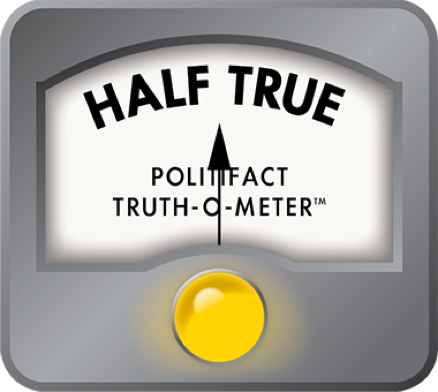
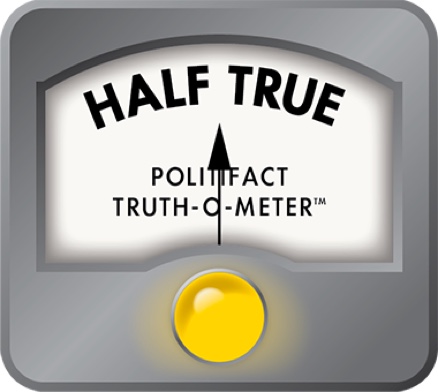
The statement is partially accurate but leaves out important information. We rate it Half True.
Chief Correspondent Louis Jacobson contributed to this fact-check.
Gov. Gretchen Whitmer substack, The Way Forward in 2026, Feb. 2, 2026
KFF, Distribution of Total Population by Federal Poverty Level, 2011-2024
U.S. Census Bureau, Poverty Thresholds, Accessed Feb. 4, 2026
News from the States, Michigan’s poverty rate is higher than the national average. What can be done? Oct. 3, 2024
Michigan Labor and Economic Opportunity, Michigan Poverty Task Force, Accessed Feb. 2, 2026
Gov. Gretchen Whitmer, Gov. Whitmer Announces Support for Bills to Roll Back Retirement Tax, Boost Working Families Tax Credit, Jan. 12, 2023
Gov. Gretchen Whitmer, Gov. Whitmer, MiLEAP Encourage Families to Enroll 4-Year-Olds Now in Pre-K, Aug. 3, 2024
Gov. Gretchen Whitmer, Accomplishments document, Jan. 7, 2026
Gov. Gretchen Whitmer, Gov. Whitmer’s Education Budget Continues Free School Meals for All, Saving Michigan Families an Average of Nearly $1,000 a Year, Oct. 13, 2025
Michigan State University, RxKids website, Accessed Feb. 4, 2026
Michigan League for Public Policy, Earned income tax credit, Jan. 26, 2024
Email interview, Nicholas Hess, fiscal policy analyst, and Patrick Schaefer, economic security policy analyst, at the Michigan League for Public Policy, Feb. 4, 2026
Email interview, Natasha Pilkauskas, associate professor, Gerald R. Ford School of Public Policy at University of Michigan, Feb. 3, 2026
Email interview, Charles L. Ballard, Michigan State University economics professor, Feb. 2, 2026
Email interview, Kristin S. Seefeldt, associate professor, School of Social Work, University of Michigan, Feb. 3, 2026
Email interview, Amanda Stitt. Gov. Gretchen Whitmer politics spokesperson, Feb. 2, 2026
PolitiFact, Inflation persists for a wide range of items in first year of second Trump term, Jan. 20, 2026









In a world of wild talk and fake news, help us stand up for the facts.