
The Trump administration removed nursing from the list of professional degree programs, affecting aspiring nurses’ student loan access.


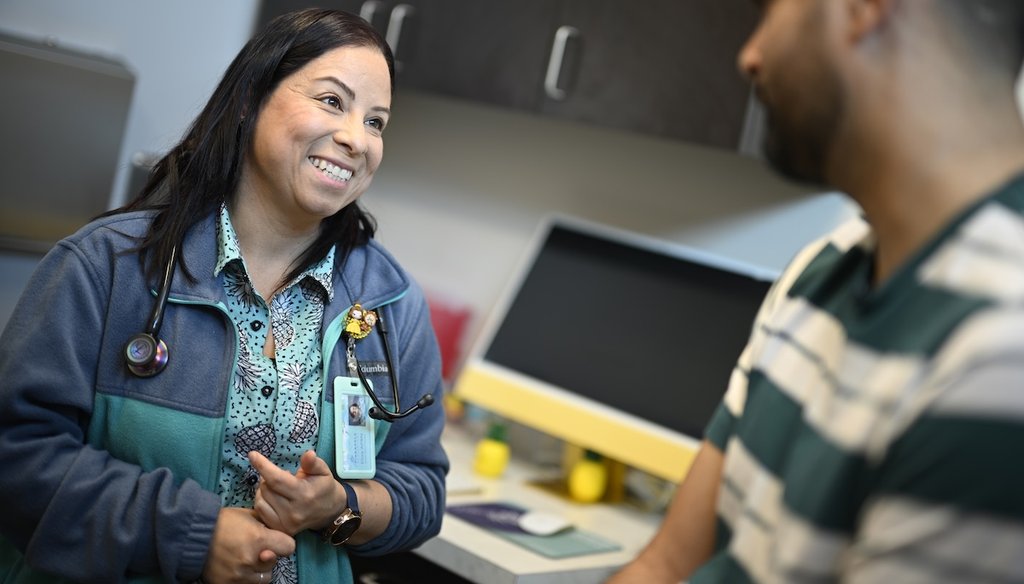
Nurse practitioner Eliza Otero, left, talks with Fernando Hermida at Pineapple Healthcare in Orlando, Fla., on May 28, 2024. (AP)


The One Big Beautiful Bill Act sets new loan limits on what it categorizes as "professional" graduate programs.
An Education Department proposal defining which graduate degrees fall into the "professional" category excludes nursing, among many other degrees.
The new federal borrowing cap affects graduate students. Not all nursing jobs require advanced degrees.
Reports that a Trump administration change might make it harder for aspiring nurses to pay for their education sparked outrage online.
Some social media users said President Donald Trump had signed legislation demoting nursing degrees from professional degree status or reclassifying nursing degrees as non-professional degrees.
"The Dept. of Education just removed nursing from the list of ‘professional degree’ programs under the Administration’s new loan rules — a move nurses say threatens the future of patient care," radio personality Angela Yee wrote Nov. 20 on Facebook.
Other social media posts passed on lists of degrees no longer considered "professional" under Trump, including nursing and also physical therapy, architecture, accounting, teaching, engineering and social work.
Graduate nursing students could soon face new federal borrowing limits, but these comments mislead by saying the Trump administration took nurses’ "professional" classification away.
Trump’s sweeping One Big Beautiful Bill Act set federal loan borrowing limits for nonprofessional and professional graduate students. The first step in implementing those new loan limits is defining which degrees are "professional."
An Education Department committee agreed on 11 professional degrees based on an existing definition in federal code; the decision is not final.
Nursing was not demoted or removed; it wasn’t on the list of professional degrees to start.
However, the changes mean students pursuing graduate degrees in nursing would have a lower borrowing cap compared with borrowers enrolled in professional degrees.
The new loan caps don’t affect undergraduate students, and not all nursing jobs require graduate degrees.
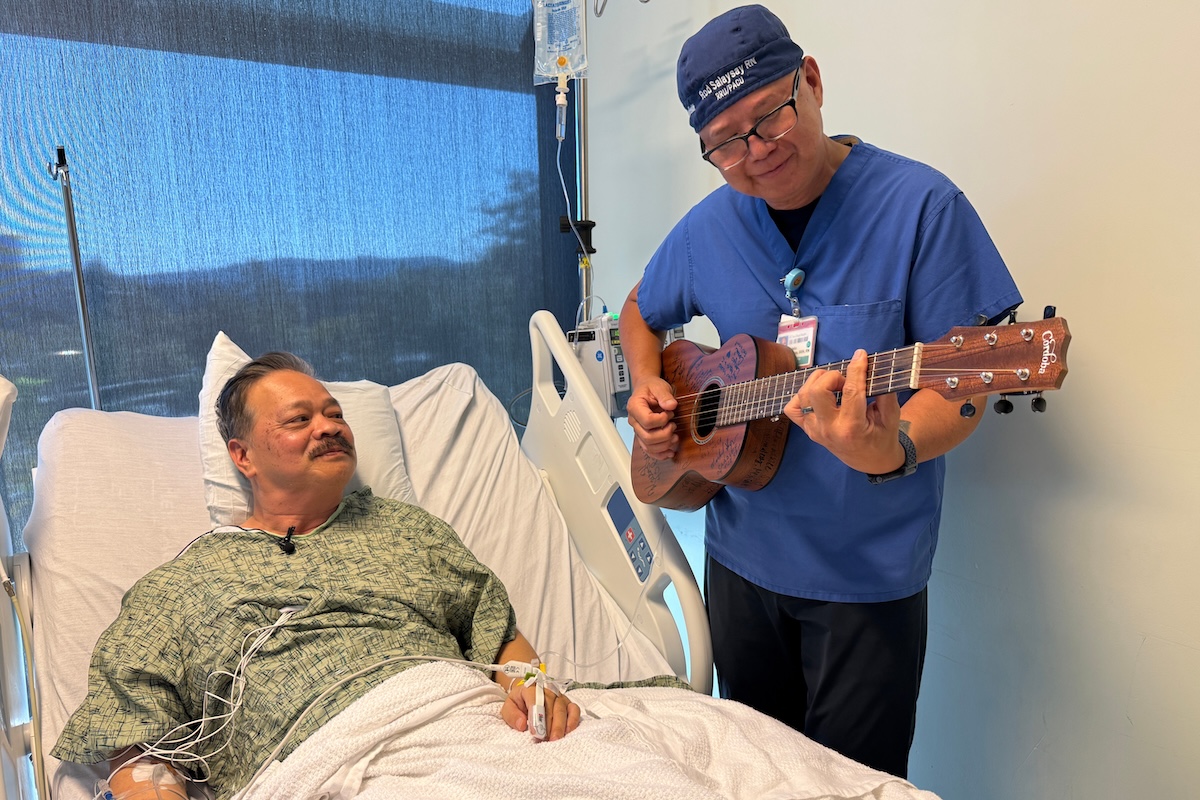
Nurse Rod Salaysay plays guitar for patient Richard Hoang in the recovery unit of UC San Diego Health in San Diego, Calif., on Sept. 30, 2025. (AP)
One provision in One Big Beautiful Bill Act eliminated a loan program that allows graduate students to borrow enough money to cover their program’s full cost. That program provided for limitless borrowing, said higher education finance expert and University of Tennessee, Knoxville professor Robert Kelchen.
In its place, the Trump-era law implements new federal loan limits beginning July 1, 2026: up to $20,500 every academic year and $100,000 in total for grad students pursuing nonprofessional degrees and up to $50,000 every academic year and $200,000 in total for grad students seeking professional degrees.
The law defines professional students as those enrolled in degrees listed in federal code. That section lists examples of professional degrees that "include but are not limited to":
Pharmacy (Pharm.D.)
Dentistry (D.D.S. or D.M.D.)
Veterinary Medicine (D.V.M.)
Chiropractic (D.C. or D.C.M.)
Law (L.L.B. or J.D.)
Medicine (M.D.)
Optometry (O.D.).
Osteopathic Medicine (D.O.).
Podiatry (D.P.M., D.P., or Pod.D.).
Theology (M.Div., or M.H.L.)
Nursing was never on that list. But graduate nursing students will be affected by the lower cap for nonprofessional graduate students.
"That distinction did not matter because graduate and professional students largely had the exact same loan limits," Kelchen said. "Now, that distinction matters."
On Nov. 6, a committee charged with implementing the federal student loan changes approved a definition for "professional students" that included the 10 degrees listed in federal code and clinical psychology. The committee also approved an expanded list of related programs that fall under those fields as "professional," such as forensic psychology and counseling psychology.
The public comment period is expected in early 2026, the department said.
The Education Department referred PolitiFact to a Nov. 24 "myth vs. fact" press release, which said its data shows 95% of nursing students borrow below the yearly loan limits and "are not affected by the new caps."
Previously, only people seeking advanced nursing degrees would have qualified for the graduate loan program that had no borrowing limits, known as Graduate PLUS.
About 45% of nurses entered the workforce with bachelor’s degrees, according to a March 2024 National Center for Health Workforce Analysis report. Some nurses have less than a bachelor’s degree; others start their careers after obtaining advanced degrees.
Some nurses choose to pursue a master’s (17%) or doctorate degree (3%) after they start working. Half of nurses said they used loans, and most nurses used federal student loans to finance their initial nursing degree, the report said.
It typically takes two to three years to earn a nursing master’s degree and roughly five to eight years to earn a doctorate in nursing, Debra Barksdale, president of the American Academy of Nursing, said.
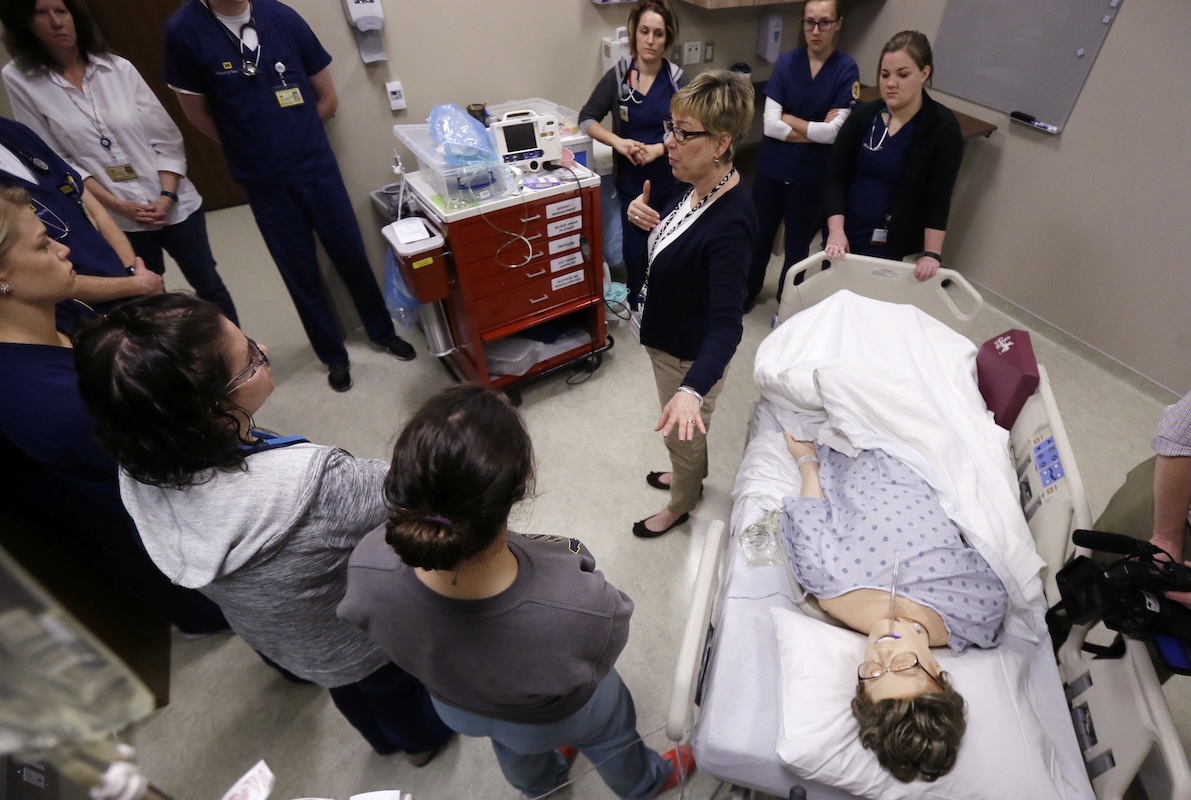
At the University of Michigan's nursing school in Ann Arbor, Mich., instructor Betsy Cambridge, center, talks to students next to a high-fidelity mannequin on March 28, 2016. (AP)
Nurse practitioners, who must complete master’s or doctoral degree programs, fill in some gaps between nurses and doctors. They can perform and interpret diagnostic tests and diagnose and treat some conditions.
"The current demand for master’s- and doctorally-prepared nurses for advanced practice, clinical specialties, teaching and research roles far outstrips the supply," Barksdale said.
Capping federal loans for graduate nursing programs could result in fewer nurses, Barksdale said.
Graduate nursing degree program costs vary. Some historic research shows that by the time nursing students complete their advanced degrees, they have borrowed less than $100,000. It’s unclear how that breaks down year-by-year for the annual $20,500 cap.
Of 140 advanced nursing programs with debt data, 115 programs’ data showed their 2019 and 2020 graduates finished degrees with median student debt below $100,000, wrote Preston Cooper, an American Enterprise Institute higher education finance expert. He said lower-cost schooling options exist.
Social media posts said the Trump administration removed nursing from the list of professional degree programs, affecting aspiring nurses’ student loan access.
A new Trump administration law imposes federal borrowing caps for people pursuing graduate degrees. The borrowing limits are lower for degrees not considered "professional." An Education Department committee proposed a definition for "professional" that largely relies on an existing federal regulation that never included nursing.
Some nursing jobs require no advanced degree, and research shows nurses typically complete their degrees with loan amounts under the new cap. However, the proposed change would put a new burden on nursing graduate students seeking federal loans, because their degrees would not be eligible for the higher "professional" cap.
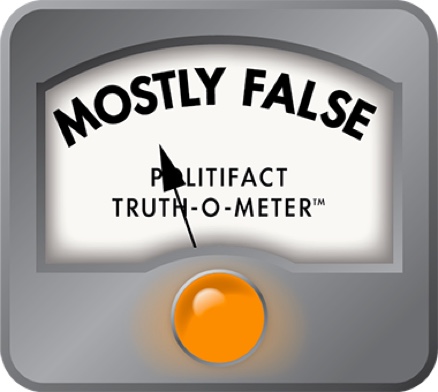
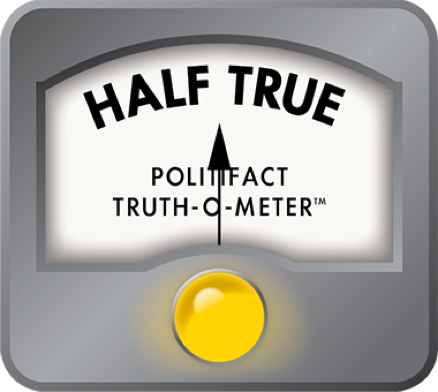
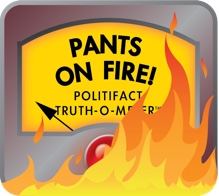
The statement is partially accurate but leaves out important details. We rate it Half True.
PolitiFact Researcher Caryn Baird contributed to this report.
RELATED: PolitiFact answers reader questions about the Big Beautiful Bill
Email exchange with the Department of Education, Nov. 24, 2025
Email interview with Robert Kelchen, an educational leadership and policy professor and department head at the University of Tennessee Knoxville, Nov. 24, 2025
Phone interview with Sarah Sattelmeyer, Project Director, Education, Opportunity, and Mobility at New America, Nov. 25, 2025
Email interview with Debra Barksdale, PhD, RN, FNP-BC, FAANP, ANEF, FAAN and president of the American Academy of Nursing and the dean of the University of North Carolina Greensboro’s School of Nursing, Nov. 25, 2025
Emailed statement from the American Nurses Association’s policy and government affairs team, Nov. 25, 2025
University of St. Augustine for Health Sciences, Nursing Shortage: A 2024 Data Study Reveals Key Insights, Dec. 30, 2024
Fox News, Evening Edition: Nursing Shortage Reaching Crisis Levels | FOX News Rundown, Nov. 22, 2025
The Los Angeles Times, California’s nursing shortage is getting worse. Front-line workers blame management, Oct. 8, 2025
NC Health News, Nursing shortage persists in North Carolina, despite recent improvements, Sept. 19, 2025
Ben Crump’s X post, Nov. 20, 2025
Gov. Michelle Lujan Grisham’s X post, Nov. 21, 2025
Gov. Michelle Lujan Grisham’s Instagram post, Nov. 21, 2025
American Association of Colleges of Nursing, Fact sheet: Nursing shortage, May 2024
Newsweek, Nursing is no longer counted as a 'professional degree' by Trump admin, Nov. 20, 2025
Not Your Average Liberal X post (archived), Nov. 23, 2025
Occupy Democrats X post (archived), Nov. 23, 2025
Angela Yee’s Facebook post (archived), Nov. 20, 2025
Janie Chuckles’ X post (archived), Nov. 23, 2025
DrDinD’s X post (archived), Nov. 21, 2025
PolitiFact, PolitiFact answers reader questions about the Big Beautiful Bill, July 16, 2025
Congress.gov, H.R.1 - One Big Beautiful Bill Act, accessed Nov. 25, 2025
New America, Five Takeaways From the Department of Education’s Student Loan Rulemaking, Nov. 17, 2025
New America, List of Programs (4-digit CIPS), accessed Nov. 25, 2025
Code of Federal Regulations, 34 CFR 668.2, accessed Nov. 26, 2025
U.S. Department of Education, Myth vs. Fact: The Definition of Professional Degrees, Nov. 24, 2025
American Enterprise Institute, What the Outrage over Nursing Loan Limits Gets Wrong, Nov. 24, 2025
National Center for Health Workforce Analysis, Nursing Education and Training: Data from the 2022 NSSRN, March 2024
American Association of Colleges of Nursing, AACN Alarmed Over Department of Education’s Proposed Limitation of Student Loan Access for Nursing, Nov. 7, 2025
American Academy of Nursing, AAN Echoes Concerns Regarding Patient Outcomes if Nursing is Not Recognized as a Professional Degree, Nov. 24, 2025
National Academy of Medicine, Nurses Are Skilled Professionals Essential to the Function of the U.S. Health Care System and Deserving of Professional Degree Recognition, Nov. 24, 2025
American Association of Nurse Practitioners, What's a Nurse Practitioner (NP)?, accessed Nov. 25, 2025
U.S. Department of Education, U.S. Department of Education Concludes Negotiated Rulemaking Session to Implement the One Big Beautiful Bill Act's Loan Provisions, Nov. 6, 2025
U.S. Department of Education, Negotiated Rulemaking for Higher Education 2025, accessed Nov. 26, 2025
U.S. Department of Education, Frequently Asked Questions: The Negotiated Rulemaking Process for Title IV Regulations, accessed Nov. 26, 2025








In a world of wild talk and fake news, help us stand up for the facts.