
Housing is expensive “because we flooded the country with 30 million illegal immigrants” and because of a housing shortage.

Our only agenda is to publish the truth so you can be an informed participant in democracy.
We need your help.

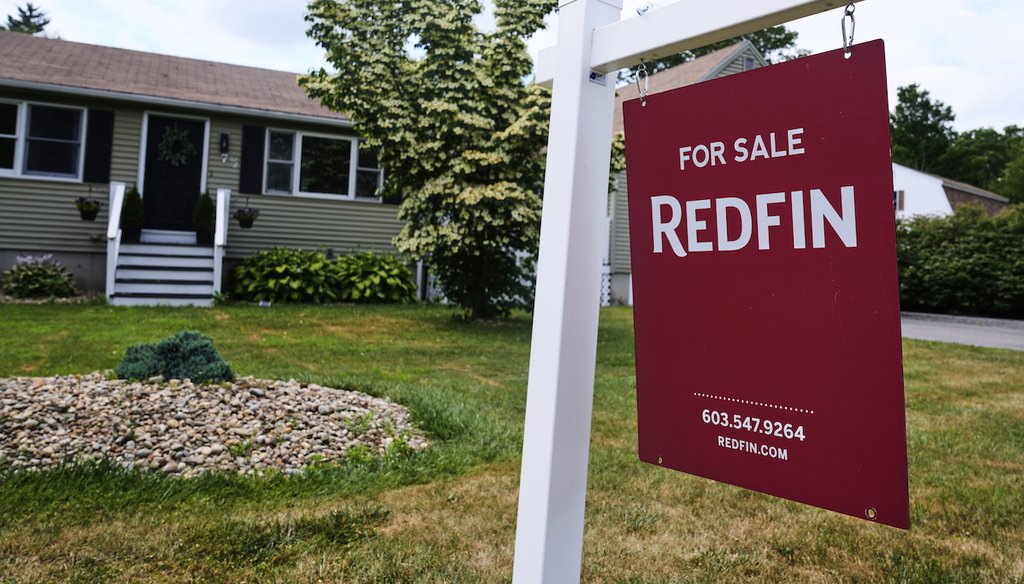
A for sale sign, from the Redfin brokerage, is displayed in front of a single family home, July 17, 2025, in Derry, N.H. (AP)

Experts agree that increased immigration leads to higher housing demand, but evidence doesn’t support the idea that immigrants in the United States illegally are a primary driver of high housing costs.
The main factor affecting housing affordability is a home shortage caused by years of underbuilding and restrictive zoning. An interest rate surge exacerbated the problem.
The number of immigrants illegally in the U.S. is less than half the number Vice President JD Vance cited. Estimates range from 12 million to 14 million people as of 2023, the latest data available.
High prices have defined local housing markets across the United States, and Vice President JD Vance blamed the situation on immigrants and housing supply.
"A lot of young people are saying, housing is way too expensive. Why is that? Because we flooded the country with 30 million illegal immigrants who were taking houses that ought by right go to American citizens," Vance told Fox News’ Sean Hannity on Nov. 13. "And at the same time we weren’t building enough new houses to begin with even for the population that we had."
The number of immigrants in the U.S. illegally is less than half that — estimates range from 12 million to 14 million people as of 2023, the latest data available. And although experts agree that increased immigration leads to higher housing demand, evidence doesn’t support the idea that immigrants are a primary reason for surging housing costs.
Vance is more accurate to cite a lack of housing supply; experts say that’s the major driver behind the lack of affordability, with elevated interest rates exacerbating the situation. The number of new homes built has plunged since the 2008 recession, resulting in a shortage of about 4.7 million homes.
The construction slowdown never returned to prerecession levels, said Chloe East, a University of Colorado Boulder associate economics professor. "During the pandemic we had supply chain shortages (and) high interest rates causing people to not sell their homes, which caused the market to stall, while demand for housing increased because of remote work, she said.
As evidence for Vance’s statement, a White House spokesperson pointed PolitiFact to multiple studies. Some of the research is outdated and some of the study authors told The New York Times their research evaluated immigration’s effects on housing in a given community, cautioning against using the findings to explain national trends.
Vance’s comments are in line with the Trump administration's framing on immigration; it has sought to blame many of the country's problems on immigrants.
U.S. home prices and rents started to climb in 2020 and 2021 as the COVID-19 pandemic drove demand for more space as people worked from home. This predated immigration increases in 2022 and 2023, and inflation surged around the same time, driving up interest rates and borrowing costs for prospective homebuyers.
Pew Research Center found there were about 800,000 more immigrants in the U.S. illegally in 2022 compared with 2019. The Center for Immigration Studies, a group that promotes lower migration levels, estimated there were 2.5 million more in 2023 than in 2020.
Newly arrived immigrants typically have low housing demand, said Dean Baker, cofounder and senior economist at the liberal Center for Economic and Policy Research. They often share housing with other immigrants or friends and relatives, he said, making their average housing consumption far smaller than is typical.
One 2007 study the White House cited found that an immigration inflow equal to 1% of a city’s population is associated with a 1% increase in average rents and housing values.
Study author Albert Saiz, a Massachusetts Institute of Technology professor of urban economics and real estate, told The New York Times in 2024 the effects were localized and would not have the same effect on prices nationally.
Jacob Vigdor, a University of Washington public policy professor and author of a 2017 study the White House cited, told PolitiFact his research found that immigrants in the U.S. illegally added "a little less than half of 1% to the cost of a home." By comparison, he said mortgage rate increases have raised the principal and interest of mortgage payments by 46%.
"When more people live in a community, there's more demand for housing," Vigdor said. "The important consideration is the magnitude of the effect, and the contribution of unauthorized immigration to housing affordability problems is about 1/100 the magnitude of the impact of higher interest rates."
Vance’s statement also ignores another role immigration plays in the housing market: Foreign-born workers make up about 30% of the U.S. construction workforce.
Recent studies have found that the federal immigration crackdown could cause a shortage of construction workers, which could slow down new housing construction, leading to higher prices.
"Immigrants provide a disproportionate share of the workforce in the construction sector," with many specializing in trades such as stucco masonry and drywall installation that can lead to construction bottlenecks when there’s a shortage, said Exequial Hernandez, a Wharton School at the University of Pennsylvania associate professor who studies immigration.
Vance said housing is expensive "because we flooded the country with 30 million illegal immigrants" and because of a housing shortage.
The number of immigrants in the U.S. illegally is less than half the number Vance cited; estimates put the number between 12 million and 14 million people as of 2023, the latest data available.
Evidence doesn’t support the idea that immigrants in the country illegally are a primary driver of high housing costs.
Instead, experts point to a shortage of millions of homes caused by years of underbuilding. An interest rate surge and increased demand for homes during the pandemic exacerbated the problem.
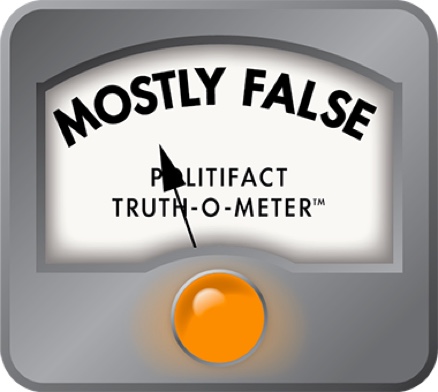
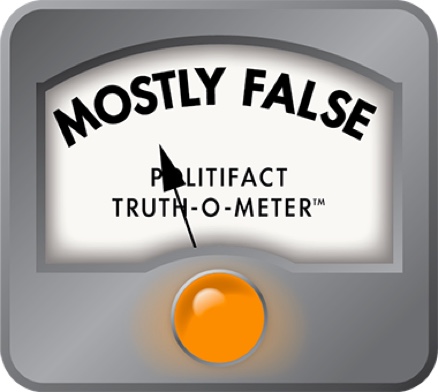
Vance’s statement contains an element of truth; a housing shortage is one of the primary drivers of U.S. high housing costs. But he misrepresents the number of immigrants in the country illegally and ignores critical facts about immigration’s effect on housing. We rate it Mostly False.
Fox News, JD Vance gives his take on how the economy is doing currently, Nov. 13, 2025
PolitiFact, VP debate fact-check: What JD Vance and Tim Walz got right, wrong on abortion, immigration, Oct. 2, 2024
PolitiFact, JD Vance’s False claim that Harris wants to give immigrants in the US illegally $25,000 for homes, Aug. 22, 2024
PolitiFact, No, Zillow’s CEO didn’t say Trump’s deportation plan would lower housing prices, Nov. 12, 2024
Center for Migration Studies, The Undocumented Population in the United States Increased to 12.2 Million in 2023, May 7, 2025
Pew Research Center, U.S. Unauthorized Immigrant Population Reached a Record 14 Million in 2023, Aug. 21, 2025
Migration Policy Institute, Unauthorized Immigrant Population Profiles, Accessed Nov. 17, 2025
Science Direct, Immigration and housing rents in American cities, March 2007
Research Gate, Wages, Rents and Prices: The Effects of Immigration on US Natives, December 2006
U.S. Government Accountability Office, The Affordable Housing Crisis Grows While Efforts to Increase Supply Fall Short, Oct. 12, 2023
U.S. House Oversight and Accountability Committee, The Consequences of Illegal Immigration for Housing Affordability, Government Budgets, and American Workers, Sept. 25, 2024
Cato Institute, Immigration, Housing Markets, and Community Vitality, 2017
Federal Reserve Bank of St. Louis, S&P CoreLogic Case-Shiller U.S. National Home Price Index, Accessed Nov. 18, 2025
Apartment List, Apartment List National Rent Report, Oct. 29, 2025
Pew Research Center, What we know about unauthorized immigrants living in the U.S., July 22, 2024
Center for Immigration Studies, In October 2023, the Foreign-Born Share Was the Highest in History, Nov. 30, 2023
U.S. Chamber of Commerce, The State of Housing in America, Updated Sept. 3, 2025
The New York Times, Trump Blames Immigrant Surge for Housing Crisis. Most Economists Disagree, Oct. 11, 2024
The New York Times, Assessing JD Vance’s Appeals to the Middle Class on the Campaign Trail, Sept. 2, 2024
National Association of Home Builders, Immigrant Workers in the Construction Labor Force, March 3, 2020
National Association of Home Builders, States and Construction Trades Most Reliant on Immigrant Workers, 2023, Dec. 11, 2024
The University of Utah, What ‘mass deportation’ means for housing costs, Jan. 24, 2025
The Urban Institute, Mass Deportations Would Worsen Our Housing Crisis, Feb. 25, 2025
Email interview, White House press office of the vice president, Nov. 17, 2025
Email interview, Dean Baker, cofounder and senior economist at the Center for Economic and Policy Research, Nov. 17, 2025
Email interview, Exequiel Hernandez, an associate professor who studies immigration at the Wharton School at the University of Pennsylvania, Nov. 17, 2025
Email interview, Jacob Vigdor, a professor of public policy and governance at the University of Washington, Nov. 17, 2025
Email interview, Susan Pozo, economics professor at Western Michigan University, Nov. 17, 2025
Email interview, Chloe East, an associate professor in Economics at the University of Colorado Boulder, Nov. 18, 2025
















In a world of wild talk and fake news, help us stand up for the facts.