Stand up for the facts!
Our only agenda is to publish the truth so you can be an informed participant in democracy.
We need your help.
I would like to contribute

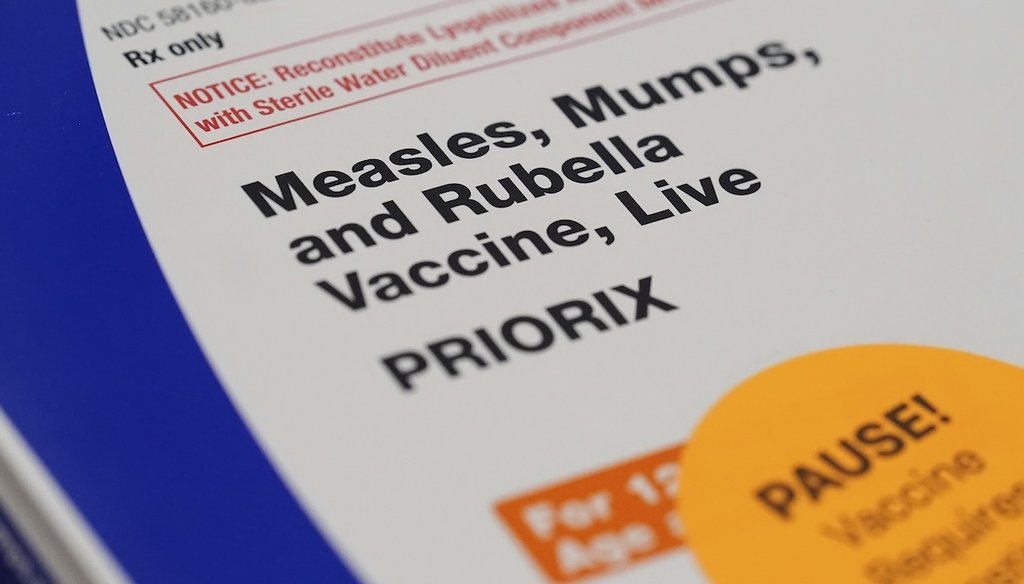
A box containing doses of the measles, mumps, and rubella vaccine (MMR) are displayed at a CVS Pharmacy, Sept. 9, 2025, in Miami. (AP)

If Your Time is short
-
Used for more than 50 years, the combined MMR vaccine is safe and effective at protecting people from measles, mumps and rubella, tests show.
-
The MMR vaccine was combined to make it easier for people to get vaccinated, which ultimately increases overall vaccination rates and decreases cases of these diseases.
-
No scientific evidence supports the MMR vaccine being separated, experts said, and doing so would likely take years.
President Donald Trump wants the combined MMR vaccine that protects against measles, mumps and rubella, broken up into separate shots.
Individual vaccines against measles, mumps and rubella are not currently available in the United States. The U.S. Centers for Disease Control and Prevention’s acting director called for manufacturers to develop separate shots and Health and Human Services Secretary Robert F. Kennedy Jr. said officials are evaluating the feasibility of separating the vaccines.
The MMR vaccine has been combined since 1971, and it would take years for separate vaccines to be tested and licensed in the U.S.
Trump’s repeated calls to "break up the MMR shot" and "take them separately" might have Americans wondering whether they can get separate shots and how and why the vaccines were ever combined. Here are some answers to common MMR vaccine questions.
Q: Why is the MMR vaccine combined, anyway?
A: Public health officials wanted to make it easier for people to get vaccinated, because that increases overall vaccination rates and decreases cases of these diseases.
Measles, mumps and rubella vaccines were good candidates for combination because they were typically given on the same schedule. Combining them meant fewer doctor’s visits and fewer needles in arms, which can be stressful for kids and parents.
Combining the vaccines was also possible because all three rely on weakened versions of the viruses to trigger immune responses that teach the body to fight the live viruses, said Dr. Walter Orenstein, an epidemiologist who directed the U.S. Immunization Program from 1998 to 2004.
These vaccines had similar ingredients and manufacturing processes, which made it possible to combine them, Orenstein said.
Scientists rigorously tested whether these vaccines could safely and effectively be combined without reducing the immune responses to each individual illness.
The MMR vaccine is administered in two doses and given to children first at 12 to 15 months old and then between ages 4 and 6. Getting your child fully vaccinated against these three diseases requires two visits to your pediatrician’s office and two shots.
If the MMR vaccine were split up and you wanted to get your child vaccinated at separate medical appointments — something Trump has also advised — it could take six visits. That means scheduling six appointments, paying for six doctor visits and your child receiving six injections.
When it is difficult to get fully vaccinated, fewer people do it.
"If you’re separating the vaccine, there’s an inconvenience," said Dr. Amesh Adalja, an infectious disease expert at the Johns Hopkins Center for Health Security. "It’s also more likely that one or more of those vaccines slips through the cracks."
Q: Does any science support separating the MMR vaccine?
A: No.
"There is no published scientific evidence showing any benefit in separating the combination MMR vaccine," Johns Hopkins Bloomberg School of Public Health posted Oct. 8 on Facebook. Other vaccine experts echoed this sentiment.
The White House provided no studies or reports that support separating the MMR vaccine into three vaccines.

Vials of the MMR measles mumps and rubella virus vaccine sit in a refrigerator with other medicine Feb. 25, 2025, in Lubbock, Texas. (AP)
Q: Are other vaccines combined?
A: Yes. The DTaP vaccine series protects against diphtheria, tetanus and pertussis or whooping cough. Like the MMR vaccine, separate vaccines aren’t available in the U.S. for diphtheria, tetanus and pertussis.
The Pediarix vaccine protects against diphtheria, tetanus, pertussis, hepatitis B and polio and the Pentacel vaccine protects against diphtheria, tetanus, polio and Haemophilus influenzae type b or Hib.
Q: If combination vaccines are intended to improve convenience, why aren’t all vaccines combined?
A: In a perfect world, all the vaccine protection a person needs could be delivered in one combined shot, Adalja said.
That’s not possible because physicians administer vaccines when the protection will be most valuable.
"The vaccine schedule is not created arbitrarily," he said. "There’s different times (of life) when you might be exposed to something, different times when the risk for severe disease is higher."
It’s also impossible to combine certain vaccines.
Some ingredients in inactivated vaccines — or vaccines that use a killed version of a germ to prompt immune response — could kill the weakened live viruses used in the measles, mumps and rubella vaccines, Orenstein said.
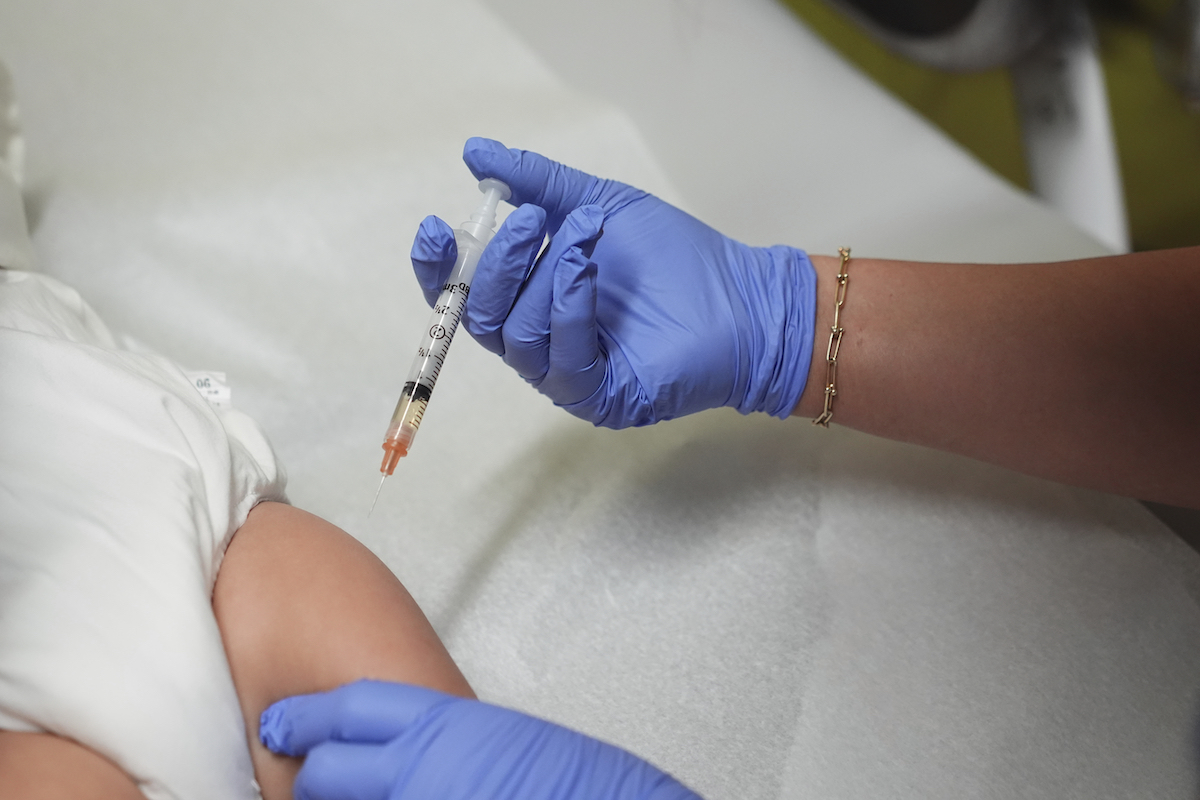
Lead medical assistant Maria Teresa Diocales administers the measles, mumps and rubella (MMR) vaccine to 1-year-old at International Community Health Services, Sept. 10, 2025, in Seattle. (AP)
Q: Do separate MMR vaccines exist anywhere?
A: No country’s government recommends using three separate vaccines to protect against measles, mumps and rubella, but separate vaccines are available in some countries for use in certain circumstances, according to the United Kingdom government.
In France, infants 6 months to 11 months can be given a separate measles vaccine if necessary following an exposure to measles or ahead of plans to travel somewhere with high numbers of measles cases. After that, however, French public health experts still recommend children receive a combined MMR vaccination following the vaccine schedule.
Japan recommends a combined measles and rubella vaccine and does not routinely vaccinate against mumps, but a separate mumps vaccine is available.
Q: Can separate vaccines be tested and licensed for use in the U.S.?
A: If it could be done at all, it would likely take years to accomplish, experts said.
"It would depend upon what regulatory requirements the (Food and Drug Administration) placed on the company in order to prove safety and efficacy of that vaccine," Adalja said.
In May, a Department of Health and Human Services spokesperson told The Washington Post that all new vaccines would be required to "undergo safety testing in placebo-controlled trials prior to licensure."
That raises ethical issues when it comes to clinical testing of individual vaccines against measles, mumps and rubella.
Oversight boards that review and approve clinical trials would not approve trials with placebo groups for measles, mumps and rubella because an existing vaccine is effective, said Angela Rasmussen, a virologist at the University of Saskatchewan.
Exposing children to potentially deadly illnesses is unethical, she said.
There’s also no guarantee that vaccine manufacturers would even attempt to separate the vaccines.
"Vaccines are not very lucrative, and they’re becoming less and less lucrative based on the environment that we have in the United States," Adalja said.
Merck and GSK manufacture combined MMR vaccines used in the U.S. GSK did not respond to PolitiFact’s questions about whether they will respond to the administration’s calls to separate the MMR vaccine.
In a statement to PolitiFact, Merck said splitting the MMR vaccine would essentially involve creating three new, experimental and separately licensed vaccines, each requiring full clinical testing and regulatory review.
"We estimate that, in total, it could take more than 10 years before Merck could obtain FDA approvals and begin manufacturing and commercialization," the company said.
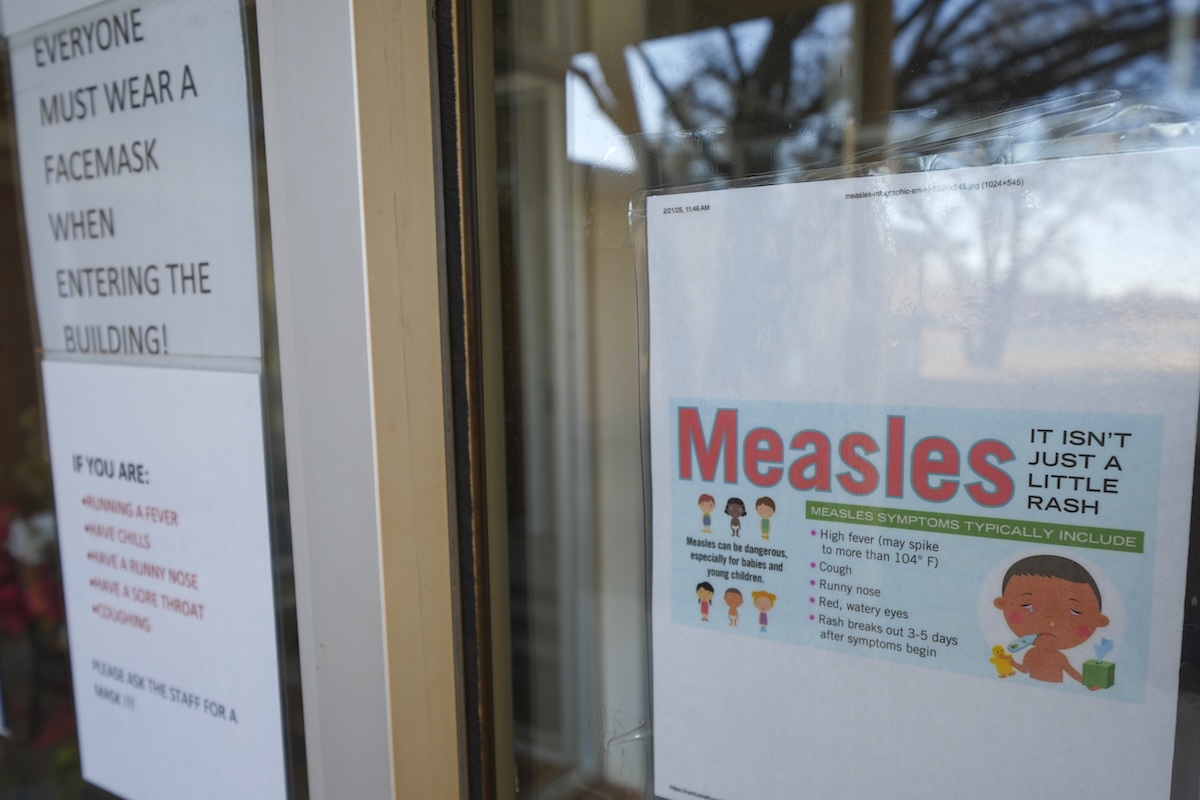
A sign is seen outside a clinic with the South Plains Public Health District, Feb. 23, 2025, in Brownfield, Texas. (AP)
Q: What would happen if the combined MMR vaccine were no longer offered in the U.S.?
A: The most immediate effect would be that vaccination would stop because there is no alternative. But even if separate measles, mumps and rubella vaccines were eventually tested, approved and available, vaccine uptake likely would drop because getting vaccinated would require more effort, Rasmussen said.
Either way, that would mean more cases of measles, rubella and mumps.
"We will see more longer term impacts too," she said. That might include increased infertility from mumps, increased disability from measles and congenital rubella syndrome, more stillbirths and miscarriages from rubella and more cases of SSPE, a progressive brain disorder that stems from measles infection.
Replacing the MMR vaccine with separate vaccines "is a preventable tragedy and terrible mistake for public health," Rasmussen said.
Editor’s note: Google Translate was used throughout the research of this story to translate websites and statements into English.
RELATED: How do countries without school vaccination requirements maintain high vaccination rates?
RELATED: Why is metal used in vaccines? Is it safe? Here’s what to know about aluminum in vaccines.
RELATED: Hepatitis B vaccine Q&A: Why do babies need the shot?
Our Sources
Roll Call FactBa.se, Remarks: Donald Trump Makes an Autism Announcement at the White House - September 22, 2025, Sept. 22, 2025
President Donald Trump’s Truth Social post, Sept. 26, 2025
Roll Call FactBa.se, Remarks: Donald Trump Holds a Cabinet Meeting at the White House - October 9, 2025, Oct. 9, 2025
President Donald Trump’s Truth Social post, Oct. 26, 2025
Interview with Dr. Amesh Adalja, senior scholar at the Johns Hopkins Center for Health Security, Johns Hopkins Bloomberg School of Public Health adjunct assistant professor and an emergency medicine and infectious disease physician at UMPC, Oct. 29, 2025
Interview with Dr. Walter Orenstein, an Emory University professor emeritus of epidemiology and a former director of the United States Immunization Program, Oct. 30, 2025
Email interview with Angela Rasmussen, a virologist at the University of Saskatchewan’s Vaccine and Infectious Disease Organization, Oct. 30, 2025
Email interview with Dr. Jake Scott, infectious disease specialist and a clinical professor at the Stanford University School of Medicine, Oct. 31, 2025
Emailed statement from Merck, Oct. 30, 2025
CIDRAP, CIDRAP Op-Ed: Why the CDC director is wrong about the MMR vaccine, Oct. 9, 2025
Johns Hopkins Bloomberg School of Public Health, What to Know About MMR and MMRV Vaccines, Sept. 24, 2025
Johns Hopkins Bloomberg School of Public Health’s Facebook post, Oct. 8, 2025
Jim O’Neil’s X post, Oct. 6, 2025
Reuters, Acting CDC director O'Neill calls on vaccine makers to separate combined MMR shot, Oct. 6, 2025
The Guardian, Alarm as CDC calls for separate MMR vaccines despite measles outbreak, Oct. 9, 2025
NBC News, Acting CDC director calls to 'break up' the measles, mumps and rubella vaccine into three shots, Oct. 6, 2025
U.S. Centers for Disease Control and Prevention, Measles Vaccination, Jan. 17, 2025
CNN, Worried about splitting up the MMR vaccine into three separate shots? You should be, this doctor says, Oct. 8, 2025
CBS News, Trump's call to split up the MMR childhood vaccine revives long-settled debate, Oct. 2, 2025
Forbes Breaking News on YouTube, BREAKING NEWS: RFK Jr. Announces New Plans At HHS To Lower Drug Prices, Oct. 29, 2025
https://publichealth.jhu.edu/2025/what-to-know-about-mmr-and-mmrv-vaccines
PolitiFact, How do countries without school vaccination requirements maintain high vaccination rates?, Oct. 28, 2025
U.S. Centers for Disease Control and Prevention, DTaP (Diphtheria, Tetanus, Pertussis) Vaccine VIS, accessed Oct. 30, 2025
Human Vaccines & Immunotherapeutics, Close the gap for routine mumps vaccination in Japan, June 12, 2020
The Washington Post, RFK Jr. will order placebo testing for new vaccines, alarming health experts, May 1, 2025
Cleveland Clinic, Congenital Rubella Syndrome (CRS): Symptoms, Causes & Treatment, accessed Oct. 30, 2025
MedlinePlus, Subacute sclerosing panencephalitis: MedlinePlus Medical Encyclopedia, accessed Oct. 30, 2025
European Medicines Agency, Monovalent and multivalent measles, mumps, rubella and / or varicella vaccines - referral, accessed Oct. 30, 2025
European Center for Disease Prevention and Control, France: Recommended vaccinations, accessed Oct. 30, 2025
High Council of Public Health, Vaccination against measles-moss-rubella initiated before 12 months. Recommendations, accessed Oct. 30, 2025