Get PolitiFact in your inbox.

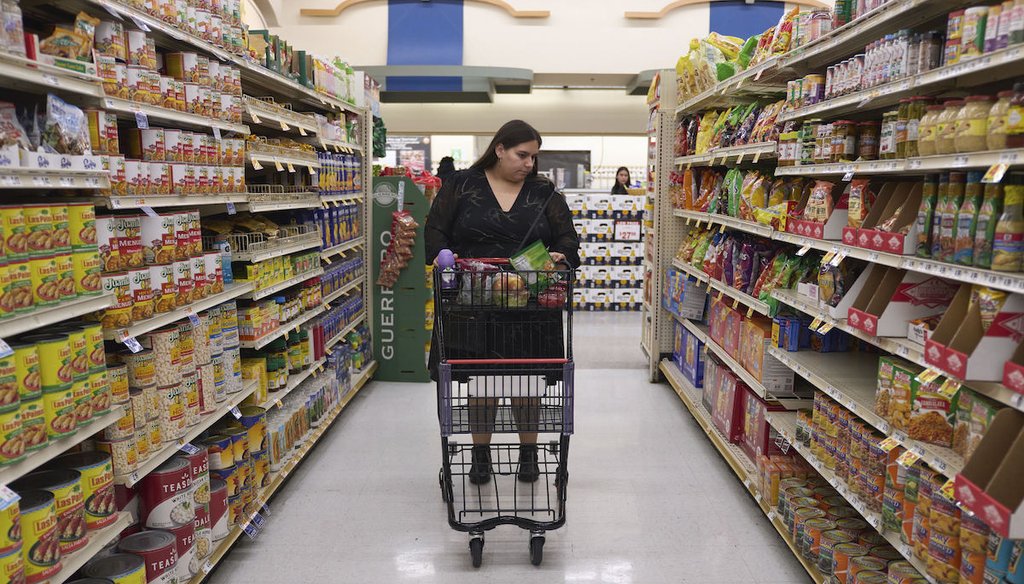
Jaqueline Benitez shops for groceries at a supermarket in Bellflower, Calif., on Feb. 13, 2023. Benitez, 21, works as a preschool teacher and depends on California's SNAP benefits. (AP)

If Your Time is short
-
About 42 million low-income people receive benefits through the Supplemental Nutrition Assistance Program, more commonly known as food stamps.
-
An Oct. 10 letter from the U.S. Agriculture Department to state agencies said if the shutdown continues, the program will run out of money in November to pay for benefits.
-
Millions of people over the next nine years could lose SNAP benefits because of legislative changes signed by President Donald Trump that became law in summer 2025.
If the federal government shutdown continues, millions of low-income Americans could lose access to a monthly benefit that pays for food.
About 42 million people receive money through the Supplemental Nutrition Assistance Program, sometimes called food stamps. The U.S. Agriculture Department told states in an Oct. 10 letter that if the shutdown continues, the program will run out of money to pay for benefits in November.
The Trump administration blamed Democrats, with Agriculture Secretary Brooke Rollins repeating a false health care talking point Oct. 16 on X: "Democrats are putting free health care for illegal aliens and their political agenda ahead of food security for American families. Shameful."
The government shutdown stems from disagreements between Democrats, who want to extend expiring enhanced subsidies for the Affordable Care Act as part of approving continued federal funding, and Republicans, who want to extend federal funding first, before negotiating over whether or how to extend the ACA subsidies.
SNAP is a federal program operated by state agencies.
Participants receive an average individual monthly benefit of about $190, or $356 per household. Recipients can use the benefits to buy fruits, vegetables, meat, dairy products, bread and other foods. The majority of SNAP households live in poverty.
Lawmakers and social media users have made several statements about SNAP with varying degrees of accuracy about the shutdown or the Republican tax and spending law that Trump signed in July. Here’s a closer look.
Social media posts say food stamps will disappear Nov 1.
Many social media posts say that food stamps are going away as soon as Nov. 1.
"Let that sink in — just in time for the cold season and the month of giving thanks," said one Instagram post.
That could happen for millions of people. But it might not happen for all of them, and it could happen throughout the month of November because the monthly date when people receive their benefits varies by state.
The Trump administration could use SNAP’s contingency fund to pay for nearly two-thirds of a full month of benefits, or it could transfer other Agriculture Department funds, according to the Center on Budget and Policy Priorities, a liberal think tank. The administration has said it has found funding to continue the Women, Infants and Children program, another food program for low-income families.
The Agriculture Department’s funding lapse plan says SNAP "shall continue operations during a lapse in appropriations, subject to the availability of funding."
The Agriculture Department’s letter told states to hold off on steps that would lead to people receiving their November benefits. Federal regulations require that reductions be made in a way that higher-income recipients lose more benefits than the lowest-income recipients.
We asked administration officials for more detail but received no response to our questions.
Many state officials including in Illinois, New York, North Carolina, Texas and Wisconsin said if the shutdown continues, participants might not or will not receive benefits in November. A spokesperson for the Florida Department of Children and Families told PolitiFact that if the shutdown continues into November, benefits will not be issued.
Gov. Gavin Newsom, D-Calif., said Oct. 22 that he will deploy the California National Guard and California Volunteers, a state office, to support food banks and provide $80 million in state money.
"Empty cupboards and stomachs are not abstract outcomes," Gov. Tony Evers, D-Wis., told Rollins in an Oct. 22 letter. "They are the very real and near consequences of the dysfunction in Washington. These are also consequences you can prevent today."
Meanwhile, food banks across the country have taken a hit from other Trump administration policies. ProPublica reported Oct. 3 that in the spring the administration cut $500 million in deliveries through The Emergency Food Assistance Program, which provides food to state distribution agencies.
"We are not cutting" SNAP.
— House Speaker Mike Johnson on "Face the Nation," May 25
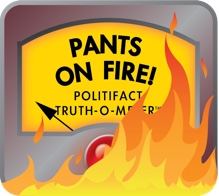
This is False.
Johnson spoke after the House passed a GOP-backed bill, known at the time as the One Big Beautiful Bill, that included many of Trump’s policy priorities.
The Congressional Budget Office, Congress’ nonpartisan number-crunching arm, estimated in May that 3.2 million fewer people per month on average would receive benefits over the next nine years based on the bill’s changes to work requirements and restrictions on states’ ability to waive the work requirements in areas with high unemployment.
A more recent August CBO analysis estimated that the changes would reduce participation in SNAP by roughly 2.4 million people.
"Nearly 25 cents of every $1 spent via SNAP goes to farmers and ranchers."
— Wisconsin state Rep. Francesca Hong, D-Madison, in a June 12 X post
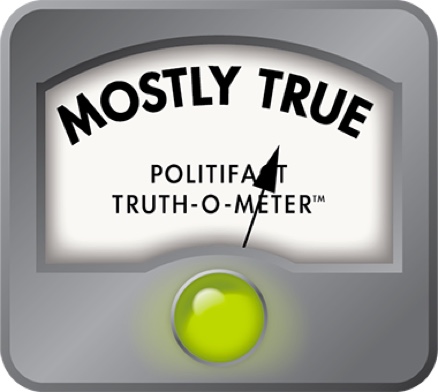
This is True.
In a series of X posts, Hong said it wouldn’t be only families receiving food aid that would be hurt by the legislation.
A chart published earlier this year by the U.S. Department of Agriculture’s Economic Research Service shows that in 2023, farm establishments made 24.3 cents for every dollar spent on food at home, including at grocery stores and supermarkets.
"About 20% of households with veterans rely upon" SNAP.
— House Minority Leader Hakeem Jeffries, D-N.Y, in a May 8 press conference
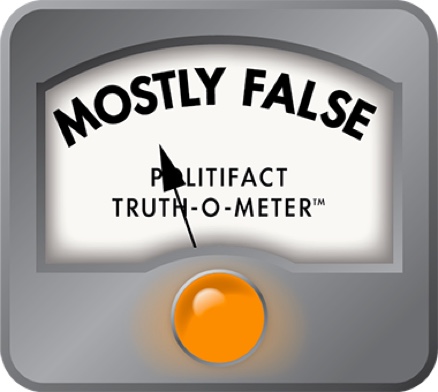
This is Mostly False.
An April 2 study found that 8% of veterans rely on SNAP benefits. No state had a share higher than 14%. Studies with data from a few years earlier show rates from 4.9% to 6.6%.
Chief Correspondent Louis Jacobson, Staff Writer Loreben Tuquero and Milwaukee Journal Sentinel reporter Madeline Heim contributed to this article.
RELATED: The Trump administration wants to rescue WIC now, but has suggested cuts in 2026
RELATED: Fact-checking political talking points about the 2025 government shutdown
Our Sources
U.S. Department of Agriculture, Lapse of funding plan, Sept. 30, 2025
U.S. Department of Agriculture, Letter, Oct. 10, 2025
Secretary Brooke Rollins, X post, Oct. 16, 2025
Secretary Brooke Rollins, X post, Oct. 21, 2025
Supplemental Nutrition Assistance Program. Data, Aug. 8, 2025
U.S. Department of Agriculture, What is Electronic Benefits Transfer (EBT)? Feb. 4, 2025
U.S. Department of Agriculture, Characteristics of SNAP Households: Fiscal Year 2023, May 2, 2025
Code of federal regulations, Sept. 26, 2025
Congressional Budget Office, Estimated Effects of Public Law 119-21 on Participation and Benefits Under the Supplemental Nutrition Assistance Program, Aug. 11, 2025
TikTok post, Oct. 21, 2025
Instagram post, Oct. 16, 2025
Gov. Gavin Newsom, California to deploy National Guard to support food banks, fast-track funding as Trump’s shutdown strips families of food benefits, Oct. 22, 2025
Illinois Department of Human Services, Trump’s Administration: SNAP Benefits Slated to be Cut Off on November 1, Oct. 16, 2025
Wisconsin Gov. Tony Evers, Wisconsin FoodShare Program to Run Out of Funding in Nine Days, Oct. 22, 2025
Gov. Kathy Hochul, Governor Hochul Slams Washington Republicans for Holding SNAP Benefits Hostage from Millions of New Yorkers Starting in November, Oct. 16, 2025
NC Department of Health and Human Services, Federal Government Shutdown: What It Means for You, Oct. 22, 2025
Commonwealth of Pennsylvania, Supplemental Nutrition Assistance Program (SNAP), Oct. 17, 2025
Texas Health and Human Services, 2025 Federal Government Shutdown, October 2025
Center on Budget and Policy Priorities, By the Numbers: Harmful Republican Megabill Takes Food Assistance Away From Millions of People, Aug. 14, 2025
Center on Budget and Policy Priorities, The Trump Administration Can and Should Take Available Steps to Ensure SNAP Participants Get November Food Benefits, Oct. 21, 2025
Food Research & Action Center, How Will a Government Shutdown Affect SNAP Benefits? Sept. 27, 2025
ProPublica, Trump Canceled 94 Million Pounds of Food Aid. Here’s What Never Arrived. Oct. 3, 2025
Snopes, Will SNAP benefits be issued in November 2025? What we know, Oct. 21, 2015
PolitiFact, Republicans falsely tie shutdown to Democrats wanting health care for immigrants illegally in the US, Oct. 1, 2025
PolitiFact, Yes, about a quarter of every dollar spent via SNAP goes to farmers and ranchers, July 30, 2025
PolitiFact, Mike Johnson is wrong: Millions could lose SNAP benefits under GOP bill, analysts find, May 29, 2025
PolitiFact, Hakeem Jeffries said 20% of veteran households use food stamps. That’s Mostly False, May 12, 2025
Agriculture Department, Statement to PolitiFact, Oct. 22, 2025
Email interview, Anna Archambault, Florida Department of Children and Families spokesperson, Oct. 22, 2025